How to Care for Bamboo and Linen Japanese Fans
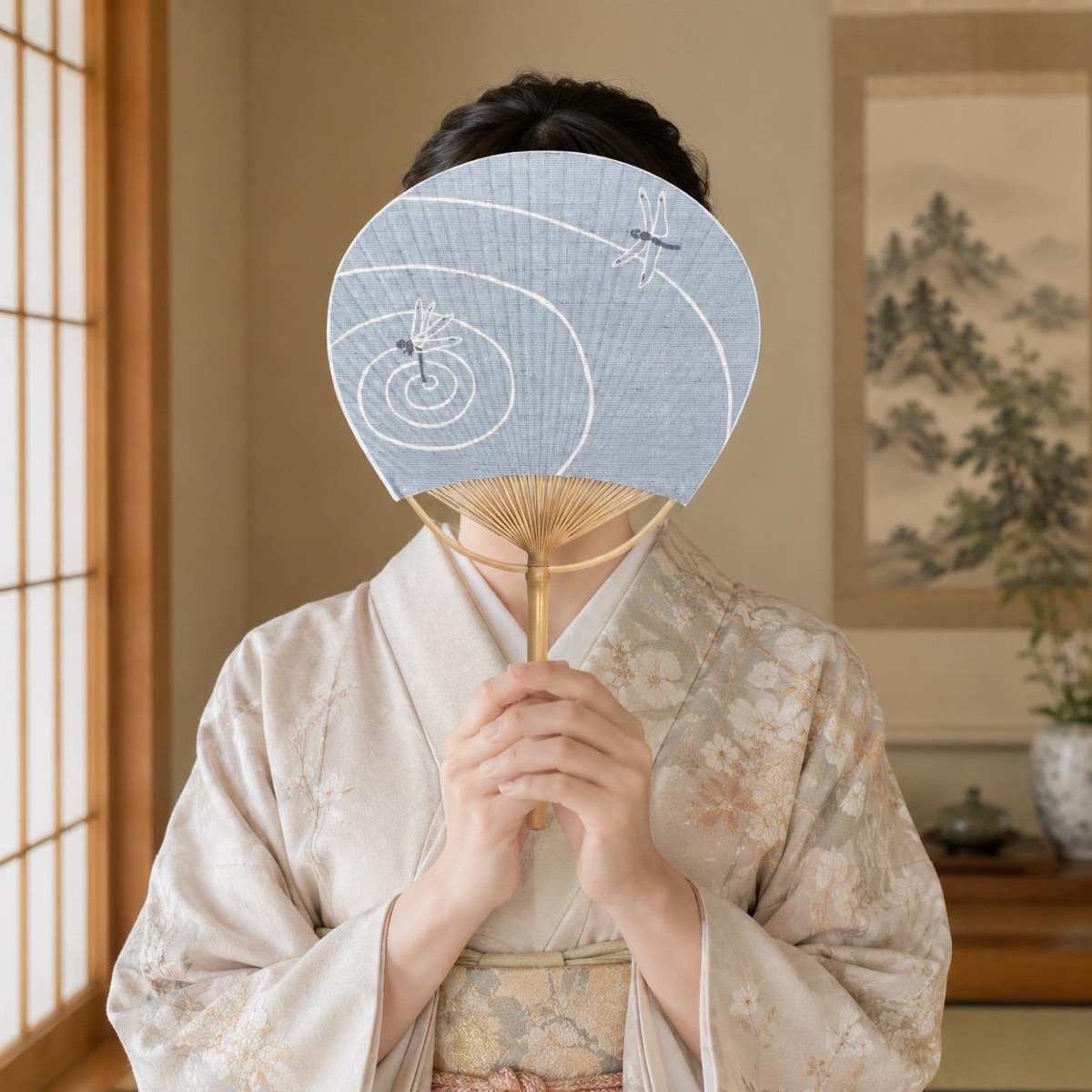
Care for a bamboo and linen Japanese fan by keeping it dry, handling it by the ribs or handle, dusting gently, and storing it away from direct sun, heat, and heavy objects. Uchiwa and sensu fans are light handmade tools, so prevention matters more than repair.
Why do Japanese fans need gentle care?
Japanese fans need gentle care because they combine several delicate parts in one small object: a bamboo frame, a textile or paper face, adhesive, folds, and sometimes printed or dyed motifs. A rigid uchiwa has a broad face stretched over a bamboo structure, while a folding sensu depends on many ribs moving around one pivot. Public craft references describe hand fans as light surfaces made to move air, not as washable household textiles. Treating a fan like a small crafted object keeps the ribs straight, the linen clean, and the display surface calm enough to use again next summer.
How should you hold an uchiwa fan?
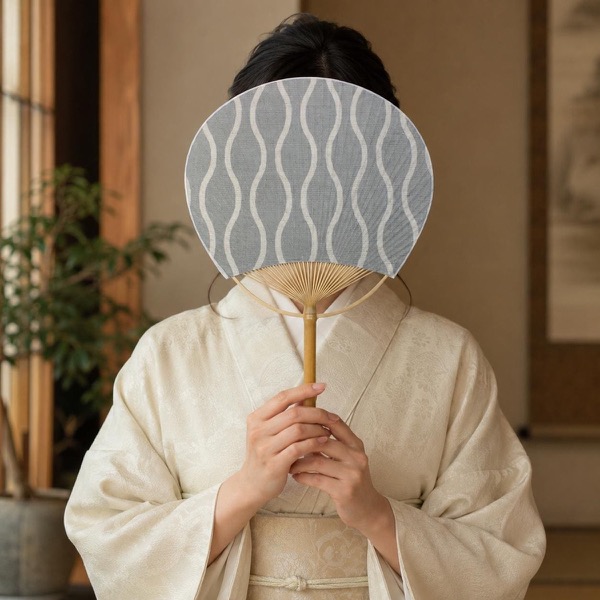
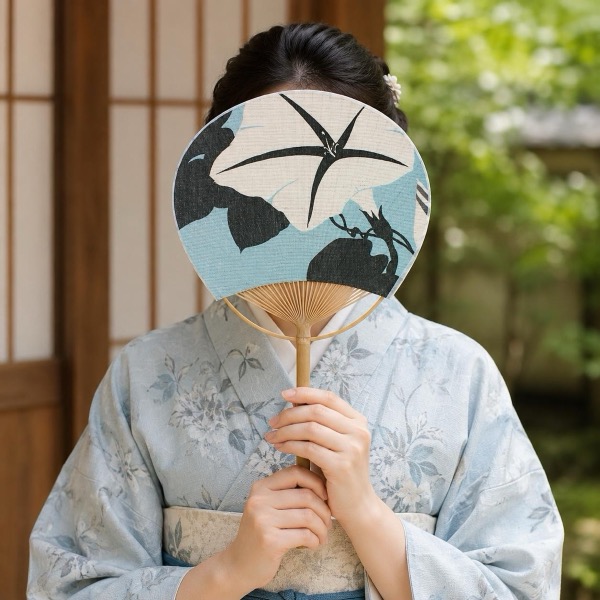
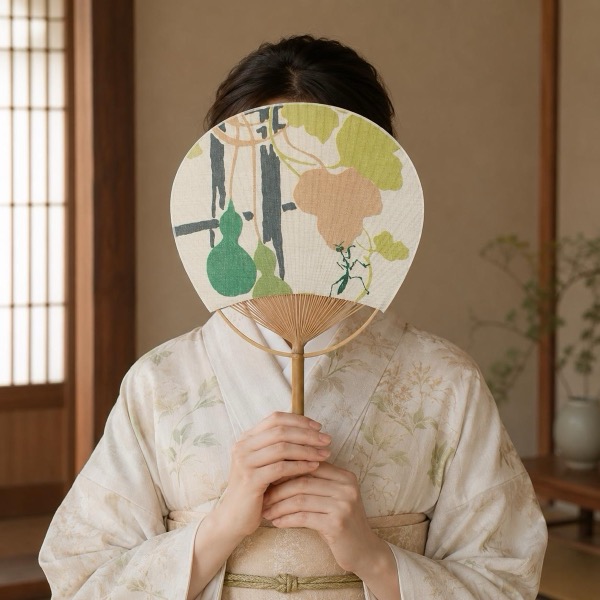
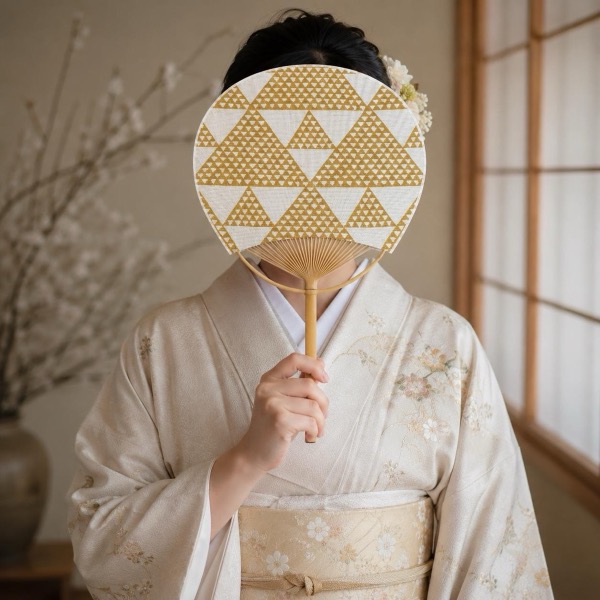
Hold an uchiwa fan by the handle, not by the linen face or outer rim. The handle is the strongest point because it connects directly to the bamboo frame, while the broad fan surface can bend if it is pinched. If you use the fan often, keep your grip low and relaxed so skin oil stays off the textile. For examples of this rigid fan shape, compare the linen dragonfly uchiwa fan with other pieces in the Japanese handcrafts collection.
How should you open and close a sensu?
Open a sensu slowly with both control and patience. Hold the pivot end, guide the outer guard rib with your thumb, and let the folds spread in sequence instead of snapping the fan open. Snapping may look dramatic, but it strains the adhesive and ribs. Close the fan in the reverse direction, gathering the ribs into one tidy stack before putting it down. If the fan resists, do not force the final fold. Dust, humidity, or slight rib movement can make a handmade folding fan feel different from day to day, so a slower motion is the safer habit.
Can bamboo and linen fans get wet?
Bamboo and linen fans should stay dry. Linen is a textile, but the fan is not a washable cloth: it is stretched, folded, or fixed to a frame. Water can leave marks, loosen adhesive, swell bamboo, or disturb the surface tension that keeps the fan neat. If a few drops touch the fan, blot gently with clean absorbent paper and let it air-dry flat in shade. Do not use a hair dryer, heater, or direct sun to rush drying. Heat can create a second problem by drying adhesive and encouraging warping.
How do you dust a Japanese fan?
Dust a Japanese fan with a soft dry brush, clean microfiber cloth, or low-pressure air from a distance. Work from the handle outward on an uchiwa and along the fold direction on a sensu. Avoid scrubbing the linen face, rubbing one spot repeatedly, or using household cleaners. If dust gathers between folding ribs, open the fan partway and brush lightly along the valley of each fold. The goal is to lift loose dust, not to polish the fan. A minute of careful dry cleaning is usually enough for a fan that has been displayed indoors.
Where should you keep a fan between seasons?
Store a fan in a dry, shaded place where it will not be crushed. A sensu should be closed and kept in its sleeve, box, or a slim drawer. An uchiwa should lie flat, stand in a loose holder, or rest in a shallow box without weight on the face. Avoid damp bathrooms, kitchen grease, sunny windows, hot cars, and shelves where books press against the frame. If the fan doubles as wall art, use the Japanese fan wall decor collection for display ideas, then rotate the piece into storage when sunlight becomes strong.
Is direct sunlight bad for fan display?
Direct sunlight is bad for long-term fan display because it can fade dyed or printed surfaces and make bamboo and adhesive age faster. A bright room is fine; a sunbeam hitting the same fan every afternoon is the risk. Choose indirect light, especially for pale linen, indigo motifs, and folding fans with many glued contact points. If you want seasonal display, treat the fan like textile art: enjoy it during summer, then rest it in shade for part of the year. Rotation keeps the room fresh and reduces the chance of one side aging faster than the other.
What should you avoid when carrying a sensu?
Avoid dropping a sensu loose into a crowded bag. Keys, pens, bottles, and laptop edges can dent the ribs or catch the textile folds. Close the fan fully, slide it into its sleeve if available, and place it beside flat items rather than under them. A folding fan is useful because it becomes compact, but compact does not mean indestructible. For a carry-friendly option, a piece such as the green stripe Ojiya Chijimi-style linen sensu should still travel with the same care you would give glasses or a small notebook.
When should you repair or retire a fan?
Repair may be worthwhile when the pivot is loose, one rib has lifted, or a small section of textile is starting to separate but the main structure is sound. Stop using the fan until it can be checked; continued opening often turns a small separation into a tear. If the bamboo is cracked across the frame or the linen face is badly warped, retire the fan from daily use and display it flat instead. Every NeoiAtelier piece is made in Japan and ships from Osaka, so preserving the object is part of preserving the quiet craft value behind it.
Where should you start?
Start with the way you actually use the fan. If it is for daily summer carry, choose a folding sensu and protect it in a sleeve. If it is for a desk, entry shelf, or summer wall display, choose an uchiwa and keep the mount gentle and reversible. For a gift, the Japanese gifts under $150 guide includes compact handmade pieces that are easy to send. A good care routine is simple: dry hands, soft dusting, shade, and storage without pressure.