How to Display Japanese Fans as Wall Art
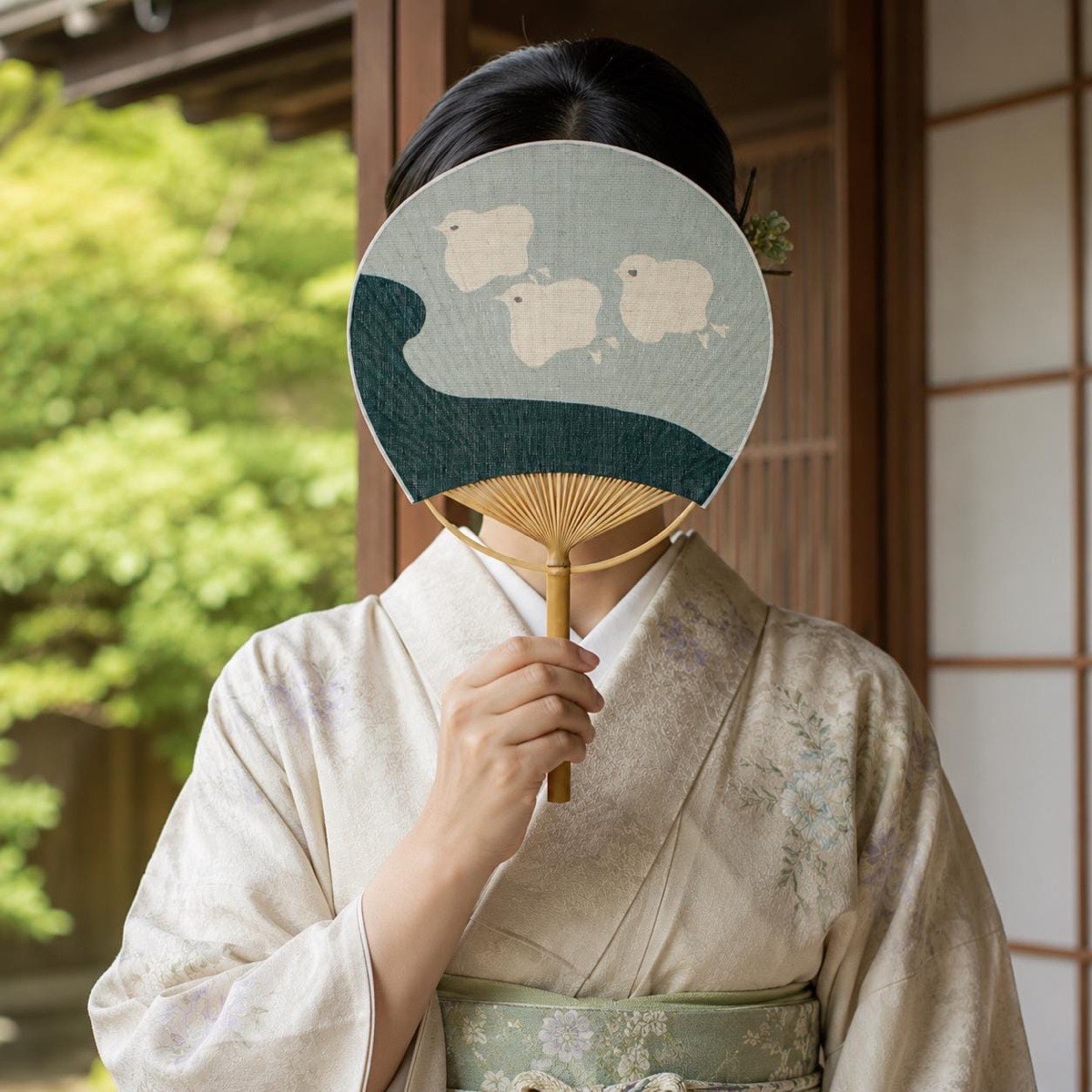
Display Japanese fans as wall art by choosing one clear focal point, leaving quiet space around the fan, and mounting it without crushing bamboo ribs or linen surfaces. Uchiwa fans suit open, graphic display, while folding sensu fans work best partly opened or paired in a small composition.
Why do Japanese fans work well as wall decor?
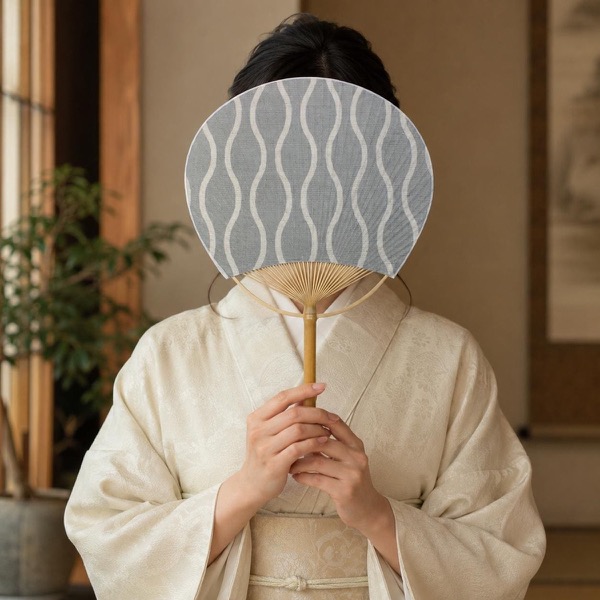
Japanese fans work well as wall decor because they combine shape, line, textile, and season in a compact object. An uchiwa has a broad paddle silhouette that reads clearly from across a room. A sensu has repeated ribs and a folding arc, so it brings rhythm rather than a flat rectangle. Public craft references for Japanese fans commonly describe bamboo, paper, and regional fan-making traditions; NeoiAtelier's current fan assortment uses bamboo with linen surfaces, including Ojiya Chijimi-style linen on several folding fans. That mix makes a fan suitable for practical use, seasonal display, or a small wall arrangement.
Should you display one fan or several?
Start with one fan if the room already has artwork, shelves, books, or patterned textiles. A single uchiwa above a console, desk, or narrow shelf can feel intentional because the rounded form breaks the straight lines of furniture. Use several fans only when the wall is quiet enough to hold a composition. Three pieces can work better than two because the center fan gives the group a clear anchor. Keep the spacing consistent and avoid arranging fans so close together that the handles, ribs, or textile motifs compete. A wall display should make the craft easier to see, not busier.
Where should you place a Japanese fan on the wall?
Place a Japanese fan where it can be seen without being touched every day: beside an entry console, above a reading chair, near a tea shelf, or on a narrow wall that needs one crafted accent. Avoid damp bathrooms, kitchen grease, strong direct sun, and spots where doors or bags may hit the handle. If the goal is a complete decor group, start with the Japanese fan wall decor collection, then choose one fan whose color and shape suit the room before adding more pieces.
How do you mount an uchiwa fan safely?
Mount an uchiwa fan by supporting the handle and the back of the fan rather than pinching the linen face. A small display hook, shallow ledge, shadow box, or fabric-safe hanger can work if it holds the fan gently and does not force the bamboo frame. Do not tape the front surface, staple the handle, or compress the outer edge. If the fan will stay on display for a long period, check it occasionally for dust and tension. The simplest rule is to make the mount removable and reversible, so the fan can return to use or storage without damage.
How should you display a folding sensu?
A folding sensu can be displayed partly open, fully open, or closed beside another object, but each choice sends a different signal. Fully open shows the arc and textile most clearly. Partly open feels quieter and can fit a narrow shelf. Closed display emphasizes the bamboo ribs and compact form, but it may not read as wall art from a distance. For a refined textile option, compare a linen Ojiya Chijimi-style sensu with broader uchiwa shapes before choosing the wall arrangement.
What colors and motifs are easiest to style?
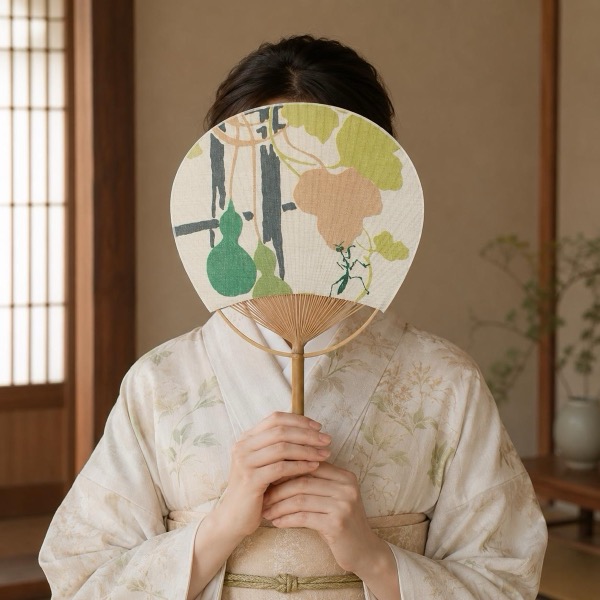
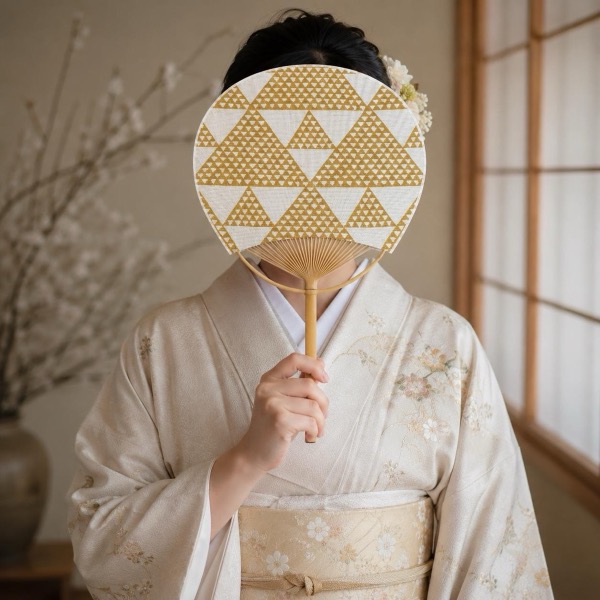
The easiest fan colors to style are those that either echo the room or deliberately contrast with it. Pale linen, beige stripes, and soft greens fit calm interiors with wood, stone, or white walls. Indigo, dragonfly, koi, morning glory, or wave motifs can become a stronger seasonal accent. If the fan has a clear botanical or summer motif, leave more empty wall around it so the design can breathe. Avoid matching every object in the room to the fan. A Japanese fan looks more natural when it is the small crafted note in the room, not the start of a theme.
Which NeoiAtelier fans are good starting points?
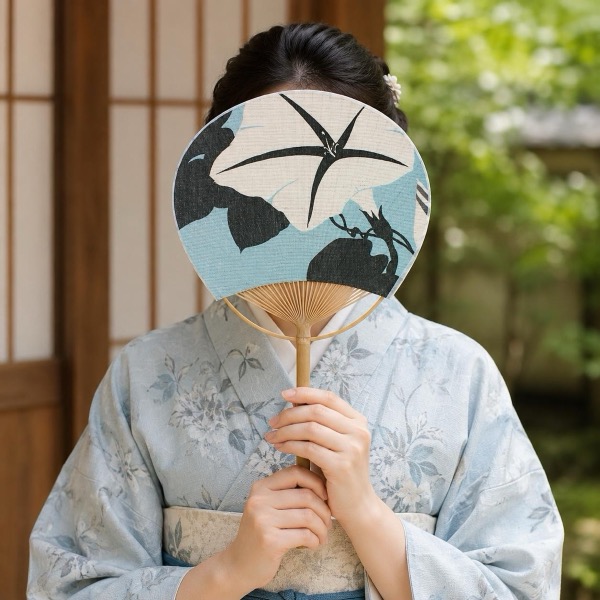
For an open wall accent, an uchiwa morning glory linen fan gives a clear seasonal shape and a lightweight bamboo frame. For a different summer motif, the uchiwa dragonfly linen fan keeps the same wall-friendly form with a quieter graphic mood. Every NeoiAtelier piece is made in Japan and ships from Osaka, so the display can focus on scale, color, and room placement.
How do you care for displayed fans?
Care for displayed fans by keeping them dry, dusting gently, and avoiding strong sunlight that can fade textile color over time. Use a soft dry cloth or clean brush around bamboo ribs and never scrub the linen face. If you rotate seasonal decor, store the fan flat or lightly wrapped in breathable paper, away from humidity and heavy objects. A wall fan should not be treated like a poster. It is a small handmade object with tension, rib structure, and fabric surface, so gentle handling matters more than frequent cleaning.
Where should you start?
Start with the full Japanese hand fans collection if you want to compare uchiwa and sensu together. If the fan is a gift rather than a room purchase, the Japanese gifts under $150 guide is useful for compact handmade pieces. Choose the wall location first, then choose the fan size and motif that can live there without crowding nearby art, shelves, or textiles.