How to Use a Japanese Folding Fan (Sensu): Etiquette and Care
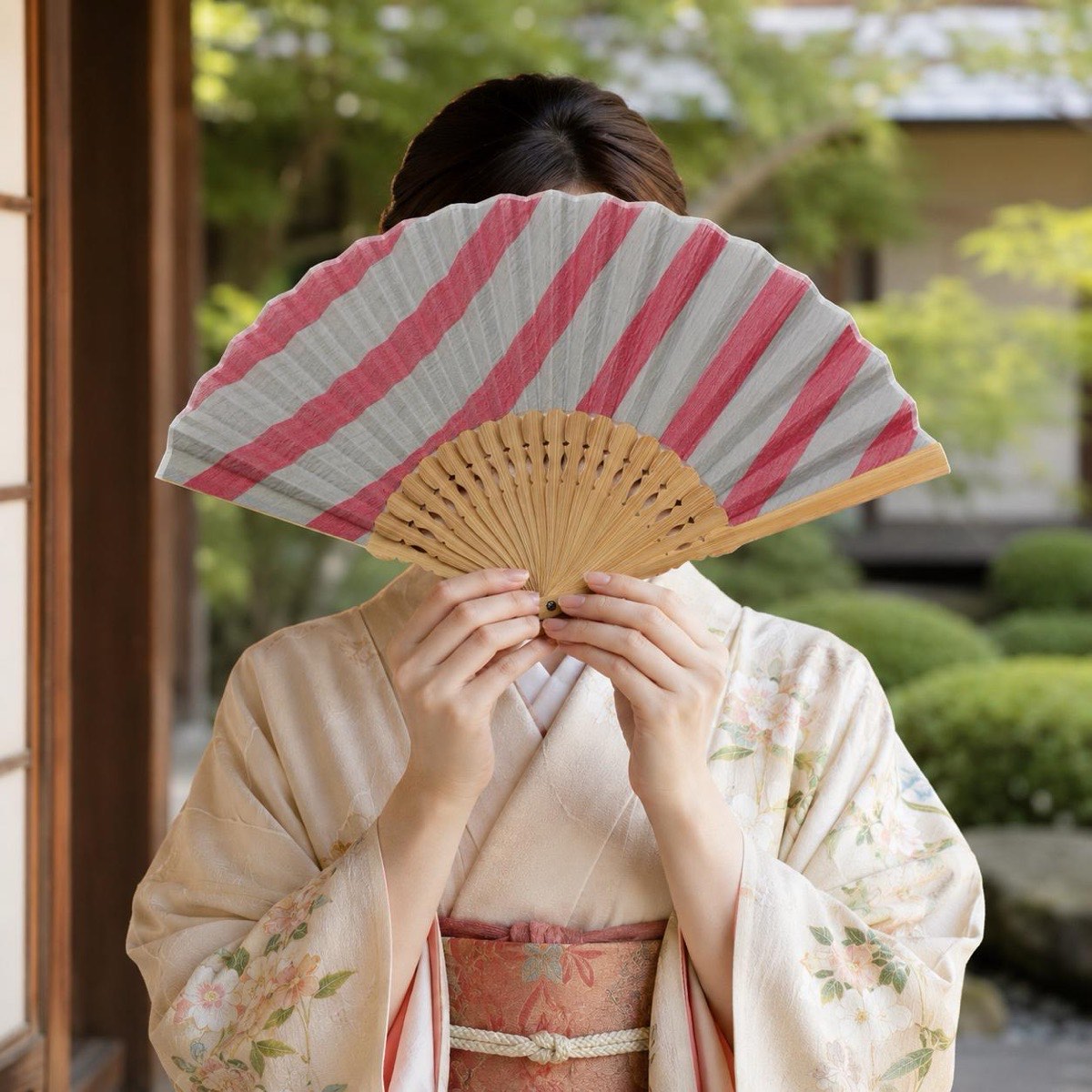
To use a Japanese sensu, hold the rivet end (kaname) in one hand, sweep the outer rib open with your thumb in a single smooth arc, and fan gently from chest height toward your face. Open and close it slowly and quietly - hurried, forceful movements are considered impolite in Japan.
How Do You Open a Sensu Folding Fan Correctly?
Support the closed fan in your left hand, grip the kaname - the pivot rivet at the base - with your right, and sweep the outer guard rib open with your thumb in one continuous motion. Leave the final centimetre folded for the most graceful finish. A sensu should never be snapped open with a flick of the wrist; the bamboo ribs and the linen or washi leaf are glued by hand, and forcing them strains the fold. Closing is the reverse: gather the ribs together gently and let the fan fall shut with a soft, controlled tap rather than a loud clap.
How Should You Hold a Japanese Fan?
Hold the fan low, by the kaname at its base, with your thumb resting along the outer rib. This grip gives a firm, steady breeze and keeps the delicate leaf away from skin oils. Traditional etiquette differs by context: women often pinch the guard ribs and let the back of the hand face the other person, a softer and more formal posture. In everyday use, simply keep your wrist relaxed and your elbow close to the body, and fan from below the chest upward toward the face so the air rises gently rather than blasting outward at the people around you.
What Are the Etiquette Rules for Using a Sensu?
Japanese fan etiquette centres on restraint. Never fan so hard that you ruffle a neighbour's hair or scatter papers - hold the fan parallel to your body and move it in small strokes. It is good manners to refrain from fanning at all inside museums, temple halls, or during Noh and Kabuki performances, where the motion distracts others. In the tea ceremony, a closed fan is laid on the floor between you and your host to mark a boundary of respect, never used for cooling. The rule of thumb: a sensu should cool you without anyone else noticing.
When Is a Folding Fan Used in Japan?
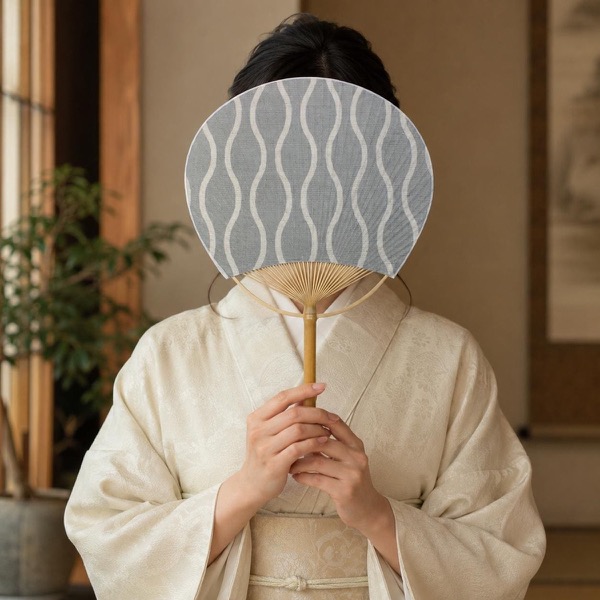
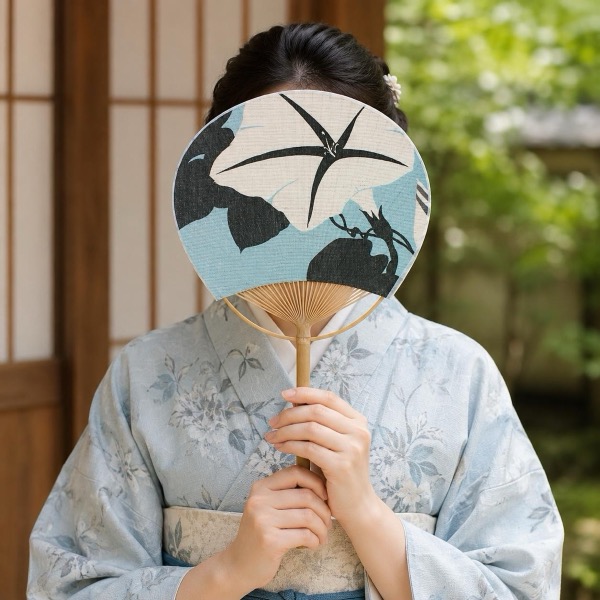
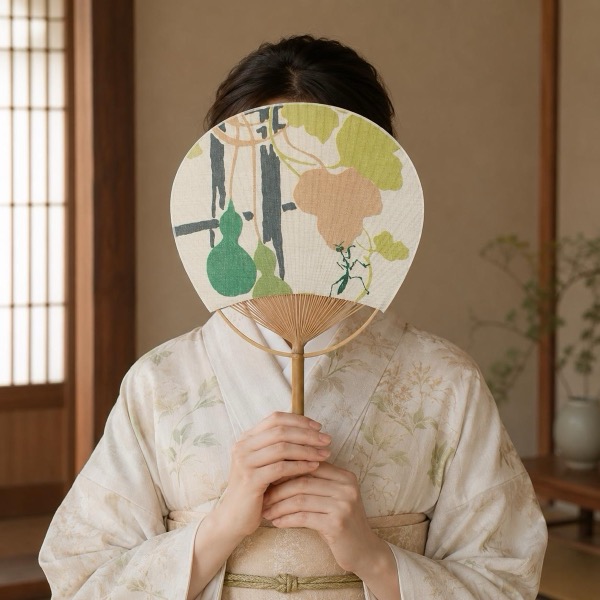
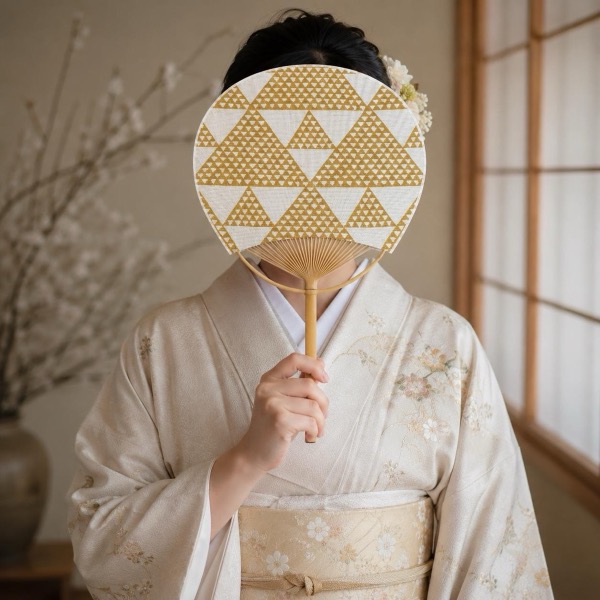
Fans are most visible in summer, from roughly June through September. They appear at bon odori dances, hanabi fireworks displays, and neighbourhood matsuri festivals, tucked into the obi sash of a yukata or carried by hand. Beyond cooling, a sensu reads as a polished seasonal accessory, which is why it remains one of Japan's most popular souvenirs and gifts. Our Japanese handcrafts collection gathers folding sensu and flat uchiwa fans woven from linen, sized for both daily carry and display.
Sensu or Uchiwa: Which Fan Should You Choose?
Choose a sensu if you want portability: a folding fan collapses flat to about 22 cm (8.7 in) and slips into a bag or pocket. Choose an uchiwa - the round, rigid fan - if you want maximum airflow and a broad surface for bold motifs like koi, dragonflies, or waves. Sensu carry stronger associations with courtly culture and formal gift-giving, while uchiwa are the casual festival fan. Many people own both: a folding fan for commuting and dining out, and an uchiwa for the porch or a summer party at home.
What Are Quality Japanese Fans Made From?
The finest folding fans, known as Kyo-sensu, have been made in Kyoto for over a thousand years, built from split bamboo ribs and a hand-applied leaf of washi paper or cloth. NeoiAtelier fans pair a bamboo frame with Ojiya Chijimi, the crepe-textured linen of Niigata Prefecture, so the leaf stays light, breathable, and crisp in humid heat. Look for tight, even ribs and a leaf glued without bubbles. A piece like our akane snow-stripe linen sensu shows the standard: clean bamboo, matte linen, and a quiet stripe.
How Do You Care for and Store a Folding Fan?
Always close a sensu fully before putting it away, and store it flat or upright in its sleeve, out of direct sun that fades dye and dries the glue. Keep it away from water; linen and washi leaves are not washable, so wipe off dust with a dry cloth only. Avoid leaving a fan open in a hot car, where heat can loosen the adhesive between ribs and leaf. Handle the fan by its ribs rather than the leaf to keep skin oils off the fabric. Treated this way, a well-made bamboo fan lasts many summers.
Is a Japanese Fan a Good Gift?
A sensu is an ideal present: compact, useful, and unmistakably Japanese, and it needs no sizing, which makes it a safe choice for someone you do not know intimately. NeoiAtelier fans range from about $59 for a mini uchiwa to $156 for a folding sensu, so there is an option for most budgets. For Father's Day or a summer birthday, browse our Japanese gifts for him, or see more affordable picks in Japanese gifts under $150. Every NeoiAtelier piece is made in Japan and ships from Osaka, where our curation team selects each fan from small regional workshops.