How to Use a Japanese Incense Burner (Koro): Step by Step
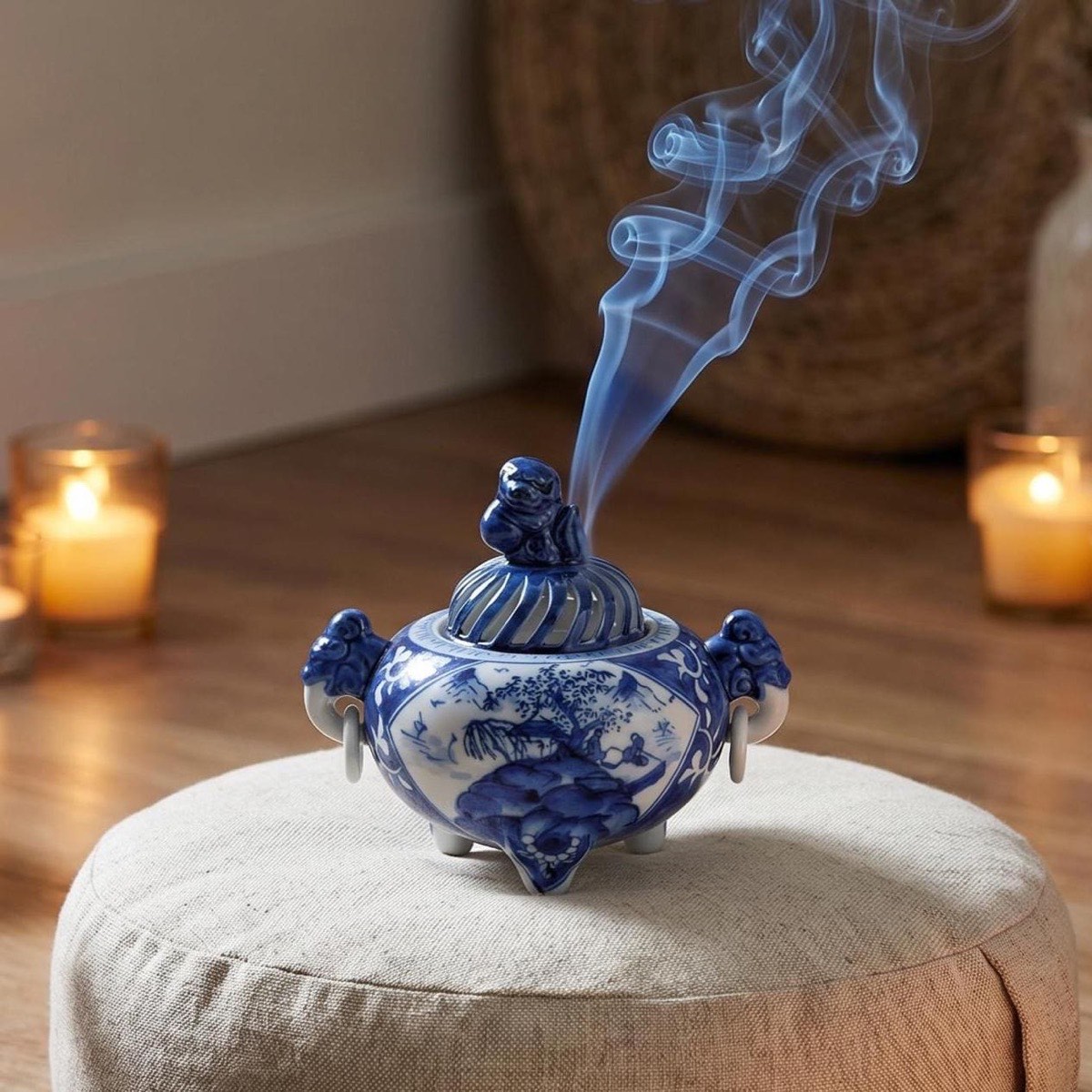
To use a Japanese incense burner, or koro, fill the bowl about 80 percent full with loose rice-chaff ash, stand a lit incense stick upright in the ash, and let it burn all the way down. The key rule: never pack the ash. Loose ash lets oxygen flow so the stick burns completely instead of going out halfway.
What Is a Koro and How Is It Different from an Incense Holder?
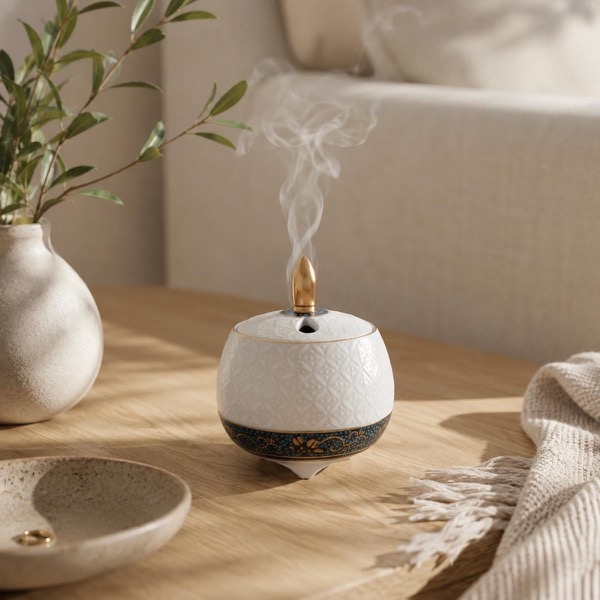
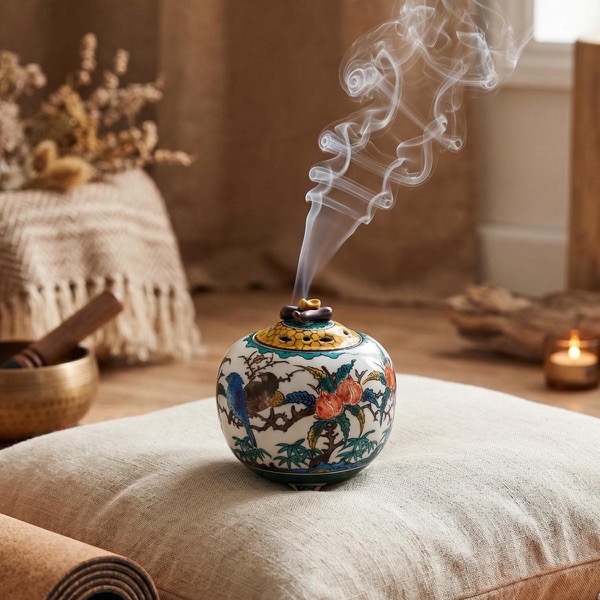
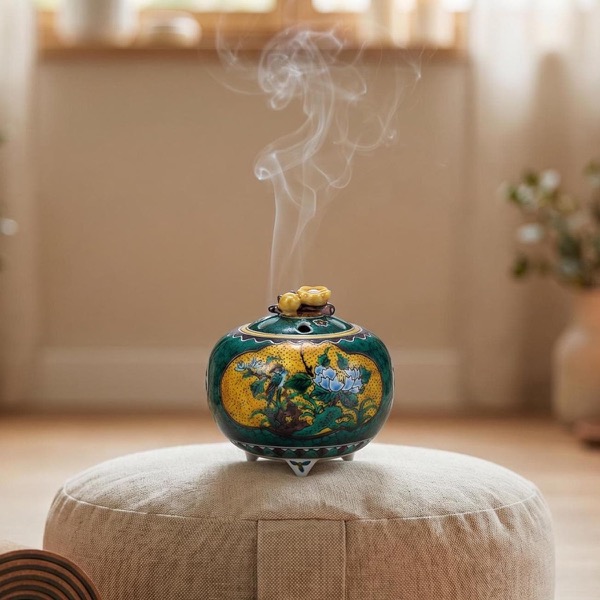
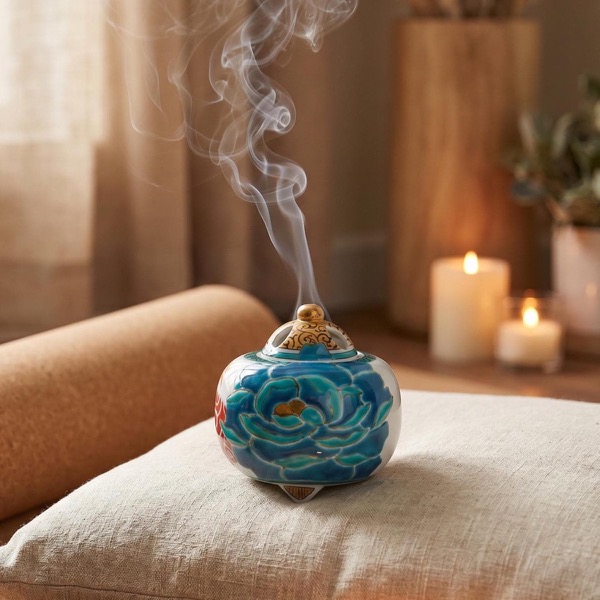
A koro is a covered Japanese censer that holds a bed of ash and contains the burning incense, while a flat holder simply props a stick over a single hole. Because the koro catches every ember and ash flake inside its bowl, it is cleaner and safer on a desk, altar, or tea-room shelf. Most fine koro are ceramic; the painted porcelain ones from Kutani ware, made in Ishikawa Prefecture since 1655, are among the most collected. Their pierced lids are designed so that, with the right incense, scented smoke drifts up through the openwork. Unlike a wooden stick holder, a koro is built to be the centerpiece of the ritual, not just a tray.
What Do You Need to Start Using a Koro?
You need three things: a koro, a bed of incense ash, and your incense. Traditional rice-chaff ash (wara-bai) is the classic filler because it stays loose and breathable, though any clean incense ash works. A pair of metal incense chopsticks (koji-bashi) helps you stand sticks upright and stir the ash, and a small ash press is optional. That is the entire kit. Browse the full Japanese incense collection to see koro, ash, and stick sets together. If you already own loose stick incense, you only need to add a koro and ash to upgrade the whole experience.
How Do You Prepare the Ash in a Koro?
Fill the koro no more than 80 percent full, or about two inches deep, with loose ash, then stir it gently in a clockwise motion with chopsticks to fluff it. Do not press the ash flat. Compressing it is the single most common beginner mistake, because packed ash starves the ember of oxygen and the stick stops burning below the surface. Fluffed ash, by contrast, breathes, so the stick burns evenly to the very end with no wasted stub. Re-fluff the surface each time before you light a new stick. A two-inch bed also insulates the porcelain so the bowl stays comfortable to touch while incense burns.
How Do You Burn an Incense Stick in a Koro?
Light the tip of the stick, let it flame for a second or two, then gently blow or wave out the flame so only a glowing ember remains. Stand the stick straight up in the center of the ash, pushing it in just deep enough to hold steady. As it burns, the spent ash drops onto the bed and can be stirred back in afterward. A typical Japanese stick burns for 20 to 40 minutes, filling a room without the heavy smoke of cheaper incense. A quiet, low-smoke set like our low-smoke incense gift set pairs well with a porcelain koro for daily use.
Should You Put the Lid On While Burning Stick Incense?
No - leave the lid off while a stick is burning. The pierced lid is meant to cover the ash between uses, keeping the bowl tidy and dust-free, not to sit over a tall stick. Once a stick has burned down below the rim of the bowl, you may rest the lid on top and watch the last of the smoke curl through the openwork holes. The lid plays a bigger role in classical kodo, the Japanese way of incense, where a small fragrant chip is warmed gently over a charcoal ember rather than burned, and the perforated cover guides the scent upward.
How Do You Maintain and Clean Koro Ash?
Stir the ash before each session and it will last for years; you rarely need to replace it. If small stick stubs or charcoal pieces build up, lift them out with chopsticks or sift the ash through a fine strainer to keep it clean and powdery. Never wash ash with water, and let the bowl cool fully before handling it. Wipe the outside of a porcelain koro with a soft, dry cloth only, since hand-painted Kutani gold and overglaze enamels should not be scrubbed. Cover the cooled ash with the lid between uses so dust stays out and the koro is ready the next time you light incense.
Which Kutani Koro Should Beginners Choose?
Start with a small or medium porcelain koro with a wide, stable base and a pierced lid - it holds enough ash to stand sticks easily and looks composed on a shelf. NeoiAtelier koro range from about $118 for a compact mountain-motif burner to $548 for a large hand-painted Sakura piece, so there is a tier for first-timers and collectors alike. A mid-range design such as the blue-landscape porcelain koro at $218 balances classic Kutani painting with an everyday-friendly size. Match the bowl opening to the incense you burn most: a wider mouth suits thicker sticks and the occasional cone, while a narrow censer favors slim daily sticks.
Is a Kutani Incense Burner a Good Gift?
Yes - a Kutani koro is a memorable gift because it is useful, beautiful, and unmistakably Japanese, with no sizing to worry about. It suits housewarmings, meditation and tea lovers, or anyone building a calm corner at home. For accessible options, see our Japanese gifts under $150 guide, or the curated Japanese gifts for her selection. Every NeoiAtelier piece is made in Japan and ships from Osaka, where our curation team selects each koro from Kutani workshops in Ishikawa. To choose your own, explore the full Japanese incense collection and find the burner that turns lighting incense into a daily ritual.