Japanese Bathroom Decor Ideas for a Calm Small Space
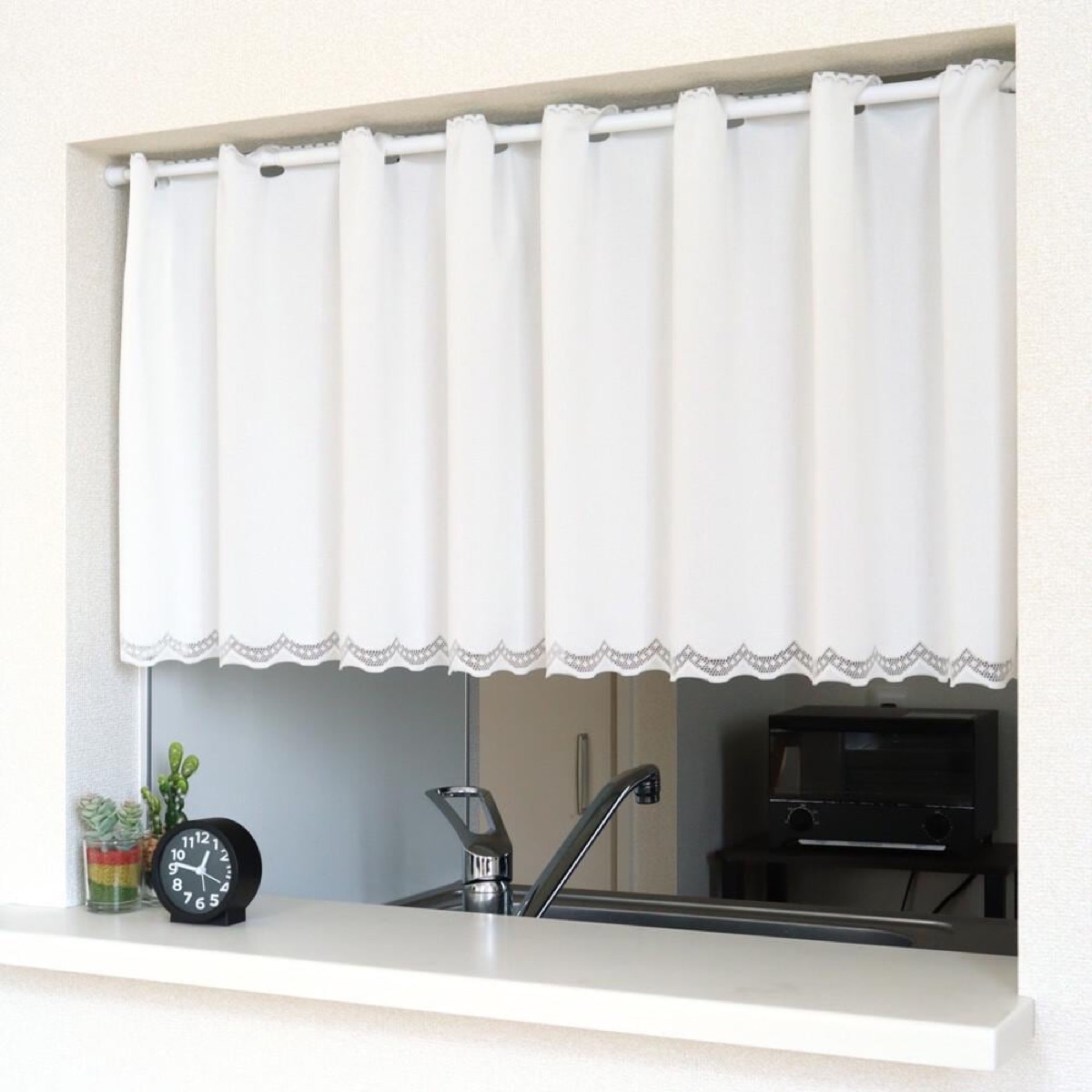
Japanese bathroom decor for a small space works best when it stays practical: keep wet areas clear, use a quiet color story, and add one textile or crafted accent in a dry spot. The aim is not to copy a spa, but to make an everyday room feel calmer, lighter, and easier to use.
What Makes a Small Bathroom Feel Calm?
A calm small bathroom is not an empty one. It is a room where the route to the sink, shower, and storage remains clear, while the materials and colors have a chance to read as a whole. Begin by removing objects that do not serve a daily purpose, then decide what the room needs most: softer light, a little privacy, more visual warmth, or a single focal point. Current bathroom and Japanese-home styling coverage has continued to favor natural-looking materials, restrained color, and room to breathe. Those ideas are useful when treated as prompts rather than a formula. In a compact room, one well-placed detail usually carries more weight than several small accessories competing for the same counter or wall.
How Should You Start With Color and Texture?
Start with the surfaces that are already there. A warm white wall, pale tile, natural wood, or muted stone-colored floor can become the basis for a simple palette without a renovation. Choose one supporting tone for towels, a small tray, or a textile, then repeat it once rather than introducing many unrelated patterns. Texture can do as much work as color: a woven surface, matte ceramic container, or softly filtered window can make a functional room feel less hard. Keep the visual emphasis away from crowded ledges and wet surfaces, where decoration becomes harder to clean and easier to knock over. The most useful test is whether the room still feels straightforward to use on an ordinary weekday morning.
Can a Cafe Curtain Work in a Bathroom Window?
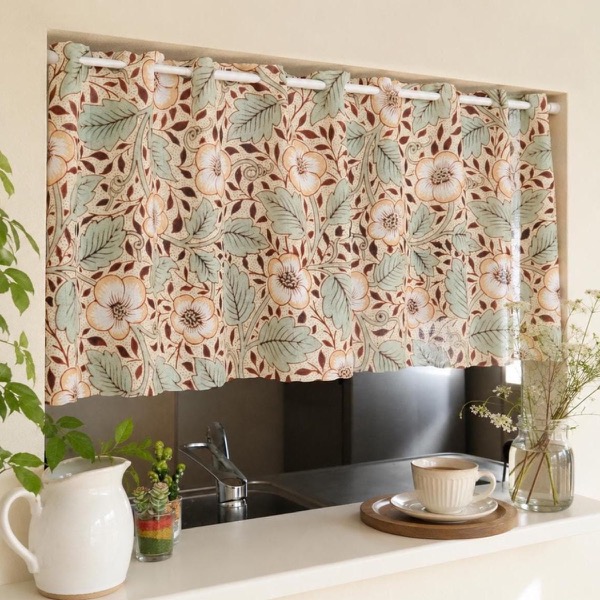
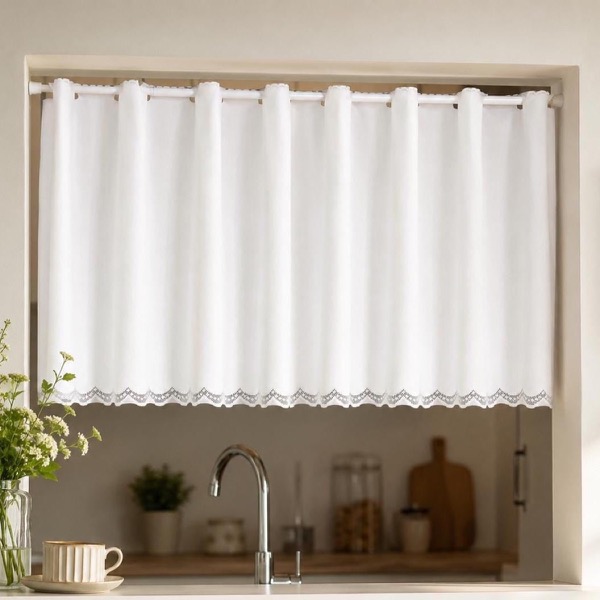
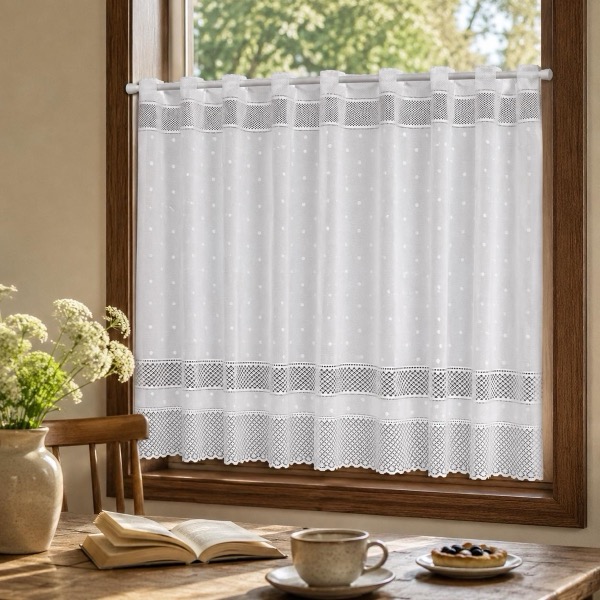
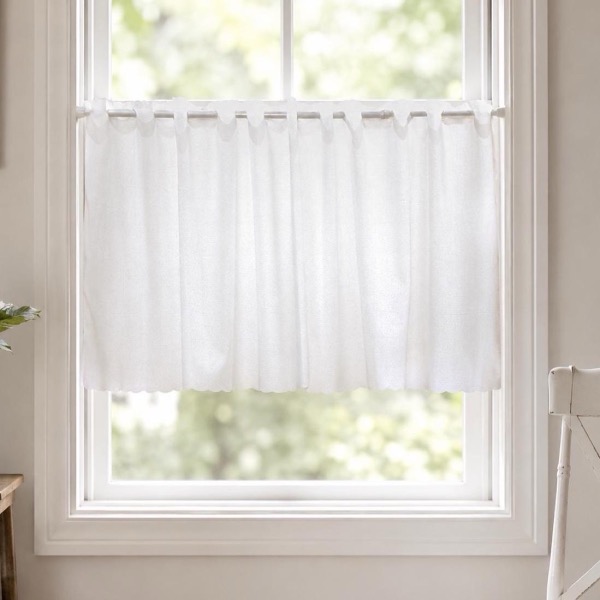
A cafe curtain can work at a small bathroom window when the window and rod sit outside the splash zone and the room has enough ventilation. Its job is modest: soften the light, add a little privacy, and make the upper part of the window feel considered without blocking the whole opening. Measure the window before choosing a panel, and keep the fabric clear of standing water, steam-heavy corners, and any heat source. A simple sheer option is especially useful when the room already has a good view or natural light and only needs a gentle layer. The plain white Japanese cafe curtain is made in Japan and sized 59.1 by 17.7 inches; check the full listing and your own window before deciding whether it suits the placement.
Where Can a Textile Add Warmth Without Getting Wet?
Put a textile where it can stay dry and do a clear visual job. That might be the outside of a bathroom doorway, a wall visible from the hall, or a storage opening just beyond the room. A noren can make a threshold feel softer without asking the bathroom itself to hold more objects, while a smaller wall hanging can add pattern in a nearby dry area. This approach keeps handmade fabric out of direct moisture and lets the room retain an easy-to-clean core. It also helps a very small bathroom feel connected to the rest of the home rather than treated as a separate decorative theme. Browse the noren and wall hangings collection for textile-led options, then use the noren size guide to check an opening before choosing a larger panel.
Should You Use Japanese Craft in a Wet Area?
Use Japanese craft in the bathroom with the same attention you would give any handmade object: put it where its material and care needs make sense. Painted porcelain, linen, paper, and bamboo should not be treated as automatically suitable beside a shower or a wet sink. Instead, let a crafted object work in an adjacent dry place, such as a hallway shelf, a dressing area, or a wall outside the door. A small fan or textile can create a visual link without becoming bathroom equipment. This is a more honest way to bring craft into the room: the object remains visible and useful while you avoid guessing about its tolerance for moisture, cleaning products, or prolonged steam. Good placement protects both the piece and the room's ordinary routine.
How Do You Add a Focal Point Without Clutter?
Choose one point that is visible when you enter, then let the rest of the room stay quiet. In a windowed bathroom, the cafe curtain may be enough. In a room with no window, the focal point might be one towel color, a small mirror, or a crafted accent just outside the door. Avoid building a shelf of objects near the basin merely because it is the easiest flat surface. That area needs to remain useful for daily care, and more items can make cleaning harder. A single object with a clear material character often feels more intentional than a set of themed accessories. If you add an accent, look at it from the doorway and remove anything that prevents the eye from resting on the room's simplest shapes.
What Is a Practical Layout for a Small Bathroom?
Think in three zones: wet, working, and visual. Keep the wet zone limited to fixtures and items made for water. Make the working zone around the sink as clear as possible, with only the things used every day. Reserve the visual zone for a dry window, wall, threshold, or nearby hall, where a textile or small crafted object can add character without affecting cleaning or safety. This simple division makes it easier to decide whether a new item earns its place. It also leaves room for the qualities that make a compact bathroom feel generous: open sightlines, a clear path, and a restrained material story. The room does not need more Japanese-style objects; it needs a few choices that are appropriate to its scale and conditions.
Where Should You Begin With Japanese Bathroom Decor?
Begin with one improvement that supports the bathroom you already have: a small window treatment in a dry, ventilated spot, a calm towel color, or a textile at the nearby threshold. Every NeoiAtelier piece is made in Japan and ships from Osaka. For a complementary accent beyond the wet area, explore the noren and wall hangings collection, the Japanese handcrafts collection, and our Japanese decor for small apartments guide. Choose the single piece that makes the route, light, or threshold feel more considered while keeping the room easy to use.