Japanese Textile Wall Hangings: A Handmade Wall Art Guide
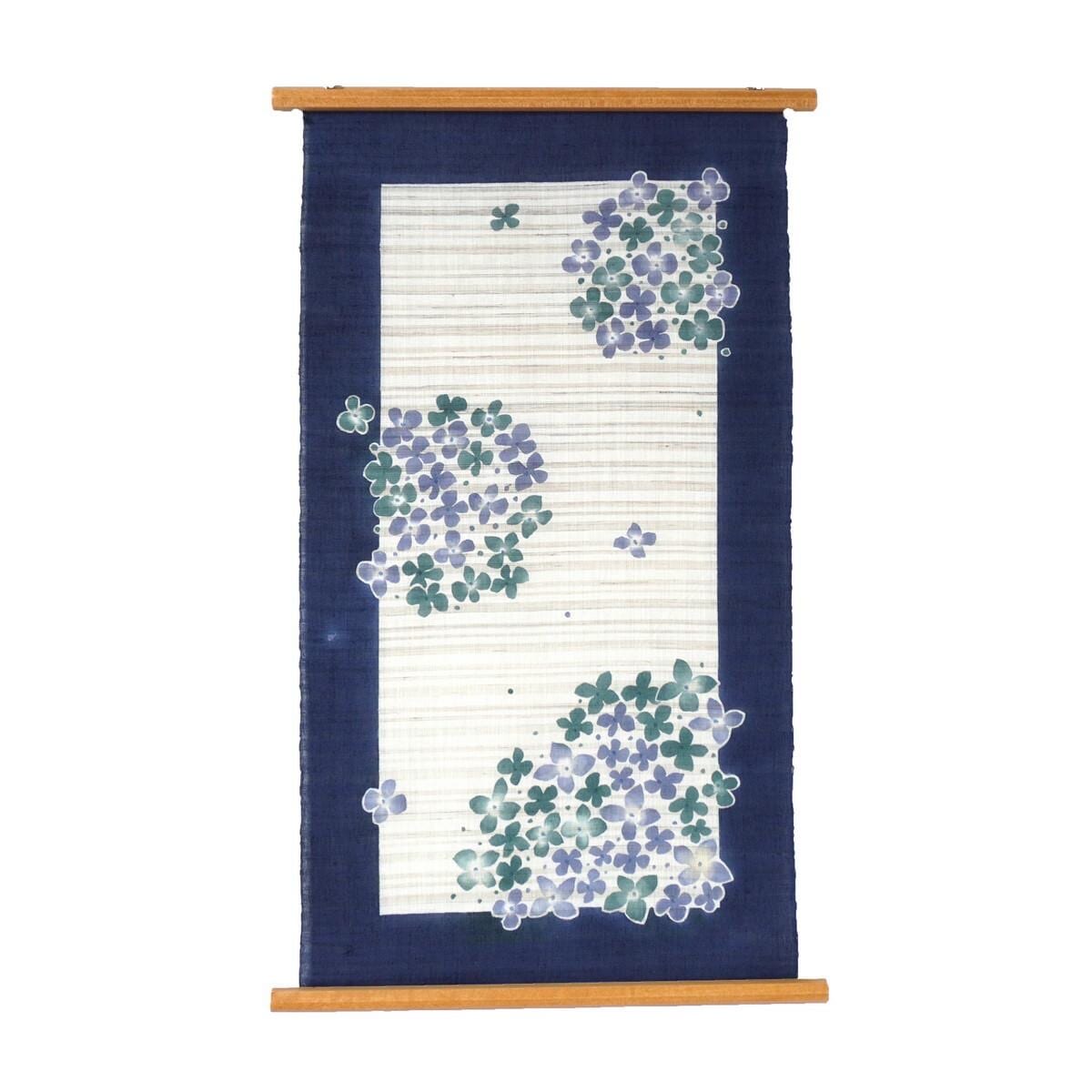
Japanese textile wall hangings bring color, texture, and a clear handmade focal point to a room without requiring a large painting or permanent installation. Choose a piece by wall scale, material, motif, and the amount of visual activity already in the room, then give it enough open space to be seen.
What Counts as Japanese Textile Wall Art?
Japanese textile wall art is fabric made to carry visual interest on the wall rather than simply cover a window or table. It can be a vertical linen tapestry, a smaller woven or painted hanging, or a noren displayed where its split panels and soft movement suit the room. The important question is not whether the fabric belongs to one narrow category. It is whether its scale, color, and surface give the room a considered focal point. A textile has a quieter presence than a framed print because light passes over its weave and edges differently through the day. That makes it especially useful in a room with wood, ceramics, books, or other materials that benefit from a little softness rather than another hard surface.
How Do You Choose the Right Size?
Choose the size by the empty wall area and the nearby furniture, not by an abstract rule about statement art. A vertical piece can work well above a narrow console, beside a doorway, or in the clear wall space at the end of a short hall. It should have visible breathing room around it so the texture can register from across the room. If the wall already contains shelving, a mirror, or a strong furniture silhouette, a smaller textile is usually easier to place. Check the individual product dimensions before deciding. The hand-painted hydrangea linen tapestry measures 17.7 by 33.5 inches, giving a useful reference for a tall, narrow wall-art format rather than a full-width panel.
Why Does Material Matter for a Wall Hanging?
Material changes how a wall hanging reads at close range and from the doorway. Linen has a visible natural weave that can make a painted or patterned surface feel less flat than a glossy print. It also works naturally with wood, earthenware, woven baskets, and simple painted walls, where a small amount of texture may be more effective than additional color. The material alone should not decide the purchase, however. Look at the room's existing surfaces, how much direct light reaches the wall, and whether the piece will be near cooking steam, splashes, or a busy passage. Browse the noren and wall hangings collection to compare linen-based pieces and choose the format that fits the actual space.
How Should You Choose a Motif?
Choose a motif you will still enjoy on an ordinary day, not one that only works as a special occasion accent. Botanical subjects can bring a gentle seasonal note to a reading corner or bedroom. A more graphic pattern can add movement to a simpler room, while a restrained landscape or repeating detail may suit a space with many books, plants, or ceramics already in view. It helps to notice the colors that are already present in the room: a textile can echo one of them without trying to match everything exactly. Do not assign a fixed meaning to a motif unless it is verified by its maker. The most reliable guide is the mood, scale, and visual rhythm that the piece brings to the room.
Can a Textile Wall Hanging Work in a Small Room?
Yes. A textile wall hanging can work in a small room when it replaces clutter rather than adding to it. Start with one clear area: the narrow wall beside a bed, a short stretch near an entry, or the vertical space above a low bench. Avoid crowding it with several other wall objects, because the textile needs a simple field around it to show its color and weave. A smaller room also rewards a piece that has a practical visual job, such as softening a hard white wall or marking the transition into a reading corner. For another format that can define a threshold without closing it off, read our guide to what a noren is, then compare the room and dimensions before choosing.
Where Should You Place Textile Wall Art?
Place textile wall art where it can be noticed without being brushed, splashed, or exposed to strong direct sun for long periods. A calm wall near a chair, entry console, or interior doorway is often more successful than the busiest route through the home. Consider the view from the room's usual seat as well as the first view from the door. If the piece is near a window, see how daylight affects its colors before making it the main accent. Keep the surrounding styling quiet: one ceramic vessel, a low plant, or a simple wood surface may be enough. The hanging should feel like part of the room's material balance, not a backdrop for more objects.
How Do You Start with Handmade Japanese Wall Art?
Start with the room that needs one softer, more personal visual note. Measure the available wall, consider whether a vertical tapestry or a doorway textile makes more sense, and choose a motif you would be pleased to live with every day. A handmade piece is most convincing when it has a clear place before it arrives, rather than becoming another item waiting for a wall. Every NeoiAtelier piece is made in Japan and ships from Osaka. Explore the Japanese textile wall-hangings collection, then use the noren size guide if you are considering a panel for a particular opening.