A Collector's Guide to Kutani Ware Incense Burners (Koro)
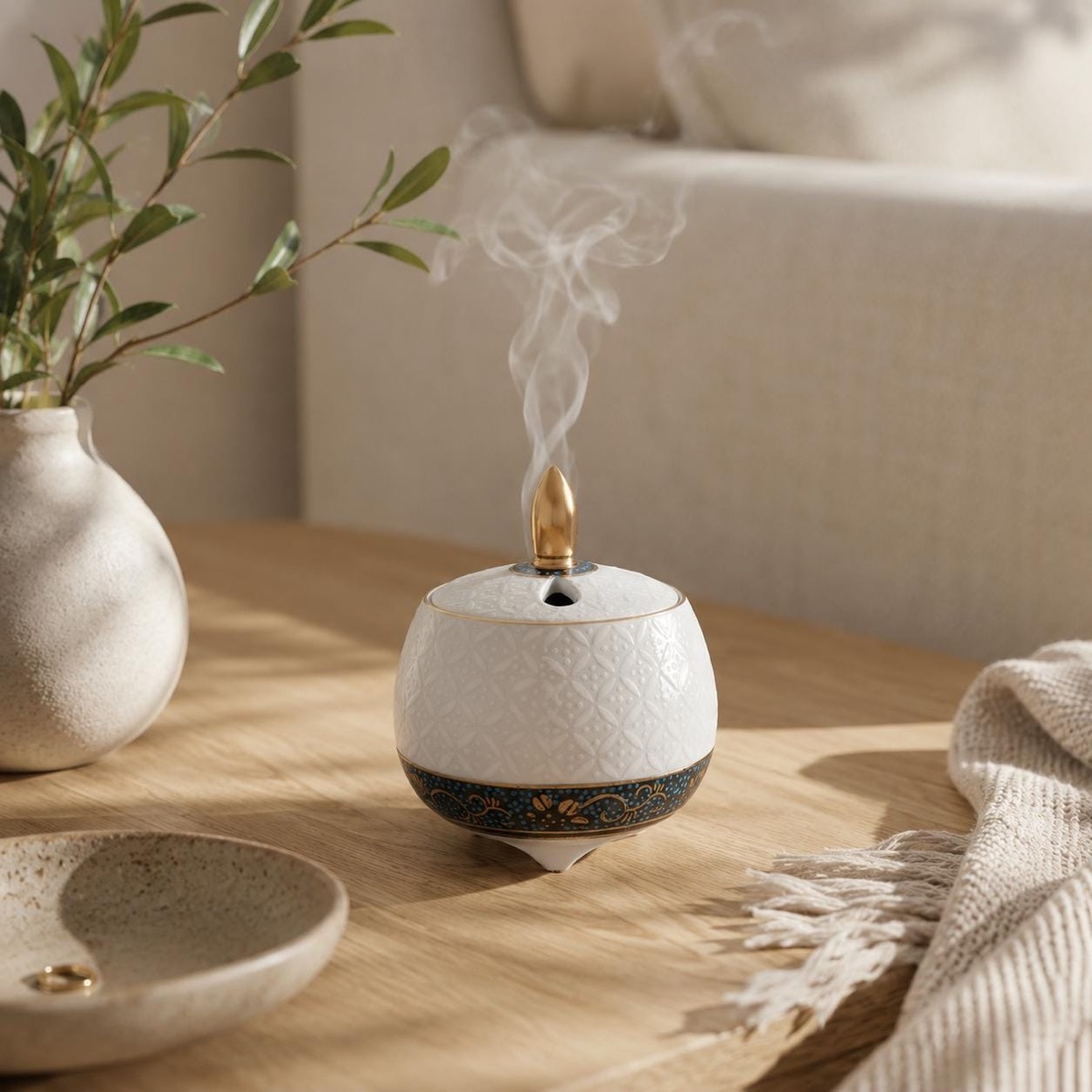
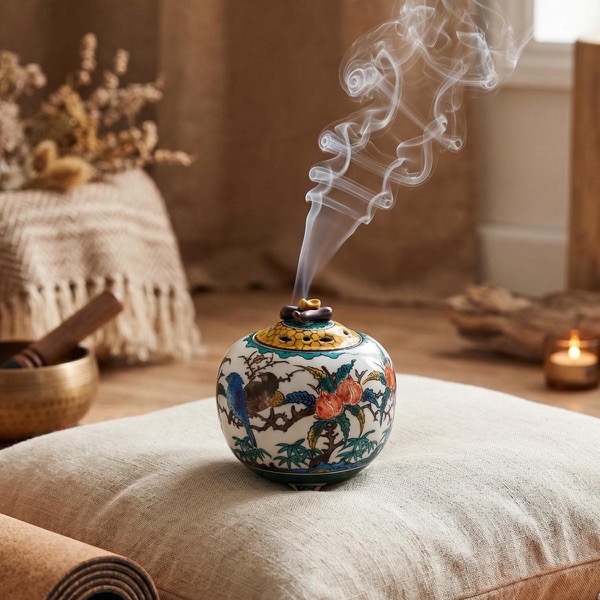
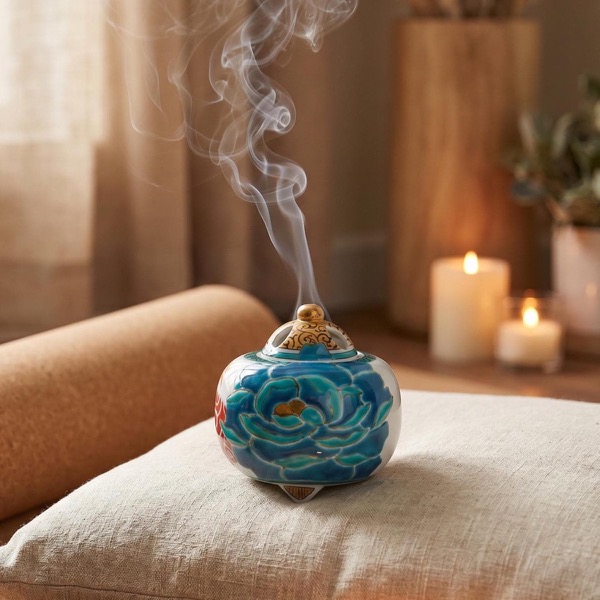
A koro is a lidded Japanese incense burner, used in tea ceremony, in temples, and in homes to scent a room slowly and quietly. When the koro is Kutani ware — porcelain from Ishikawa Prefecture, first fired in 1655 — it is also a small canvas: peonies, plum and moon, flower-and-bird scenes painted in the five classic Kutani enamels.
Why Kutani ware
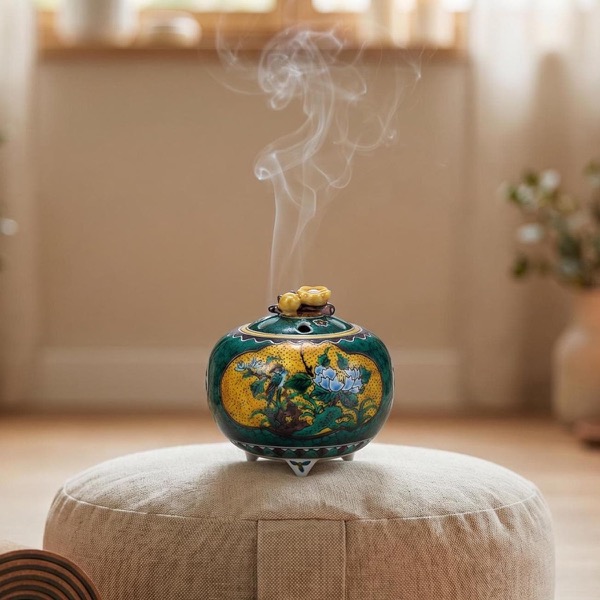
Kutani porcelain (Kutani-yaki) is among Japan's most celebrated overglaze traditions. Styles you will meet on koro include Ko-Kutani (bold green and deep yellow), Yoshidaya (no red — green, yellow, purple, blue), and Mokubei (red-ground figures). A hand-painted Kutani koro is functional porcelain and collectible art in one object.
How a koro is used
Burn incense sticks, cones, or charcoal with kneaded incense inside; the pierced or domed lid diffuses smoke softly. Many collectors never burn anything at all — a koro in a tokonoma alcove or on a shelf is a finished still life. If you do burn incense, rest it on a bed of ash or a small dish to protect the glaze.
Choosing your first koro
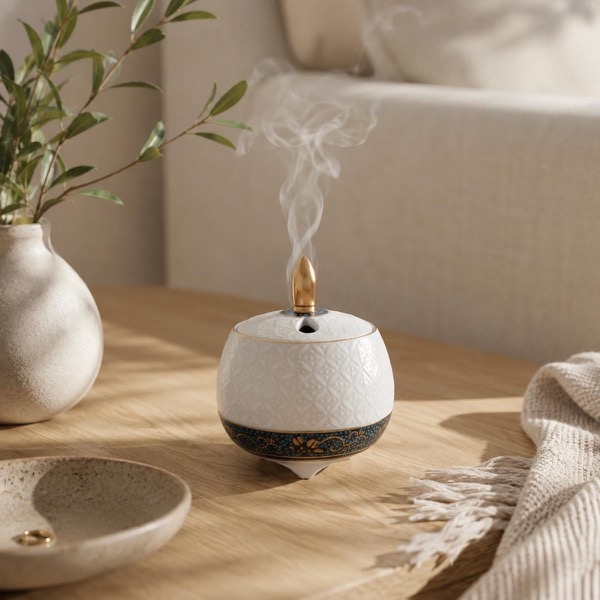
Pick the painting style first — bold Ko-Kutani for a statement, white-and-silver or blue landscape pieces for minimal interiors. Then size: small koro (2–3 in) suit desks and tea corners; larger pieces anchor a console or alcove. Every koro we curate is hand-painted in Japan, checked in Osaka, and shipped in gift-ready packaging — see the full Kutani koro collection.
Caring for porcelain
Wipe with a dry or barely damp cloth; avoid abrasives and dishwashers. Overglaze enamels and gold accents live on top of the glaze, so treat the surface as you would a painting. With this much care, a koro outlives its owner — which is rather the point.