Uchiwa Fan Summer Decor and Gift Guide
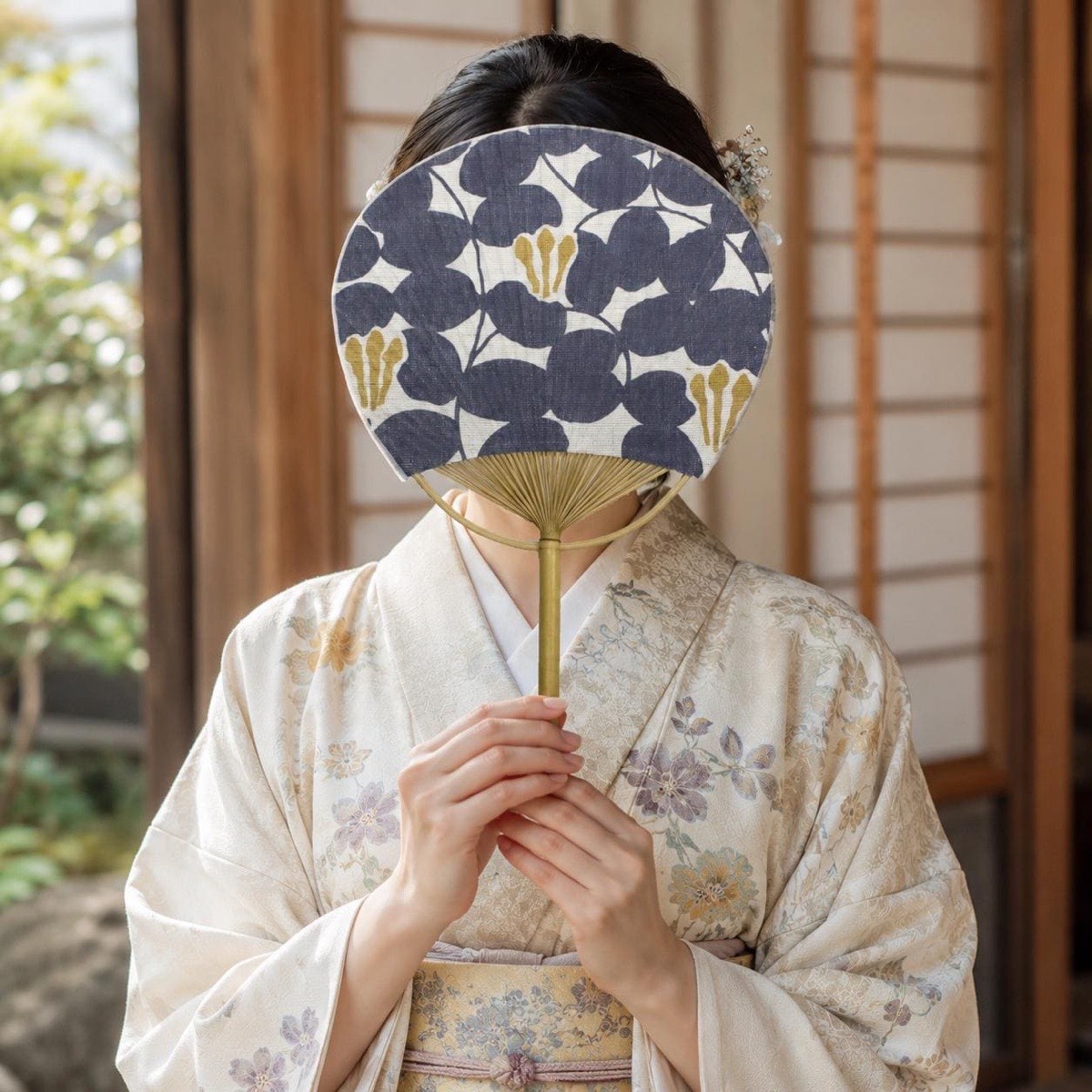
An uchiwa fan is a rigid Japanese hand fan that works as both a practical summer object and a compact decorative gift. Choose one when you want an open fan shape, visible seasonal motif, and easy display on a wall, shelf, desk, or entryway.
What is an uchiwa fan?
An uchiwa fan is a non-folding Japanese fan with a fixed face and handle. Unlike a sensu, which opens and closes around a pivot, an uchiwa keeps its full outline visible all the time. That shape makes it especially useful when the fan is meant to be seen as decor. Public museum and craft references connect uchiwa with printed fan designs, summer use, and everyday hand cooling, while current product pages show the same practical form translated into linen, bamboo, and quieter interior motifs. For a buyer, the key point is simple: choose uchiwa when the fan should read clearly from a distance.
Why are uchiwa fans good for summer home decor?
Uchiwa fans are good for summer home decor because they add a seasonal signal without taking over the room. A single fan can soften a blank wall, lighten an entry shelf, or add a handmade accent beside ceramics, incense, or a tea tray. The rigid outline also makes styling easier than with a folding fan because the shape stays open by itself. Choose airy space around the fan, avoid crowded gallery walls, and let the motif do one job. A wave, dragonfly, koi, morning glory, or geometric pattern feels strongest when it has enough room to be read.
Where should you display an uchiwa fan at home?
Display an uchiwa fan where it can be seen without being handled constantly: an entryway, bedside wall, writing desk, alcove shelf, tea corner, or summer dining nook. Keep it away from direct sun, kitchen steam, and damp bathroom air. A removable hook, shallow stand, or shadow-box mount is better than tape on the linen surface. For layout ideas, start with the Japanese fan wall decor collection, then decide whether the room needs one fan, a pair, or a small seasonal group.
How do you choose a summer motif?
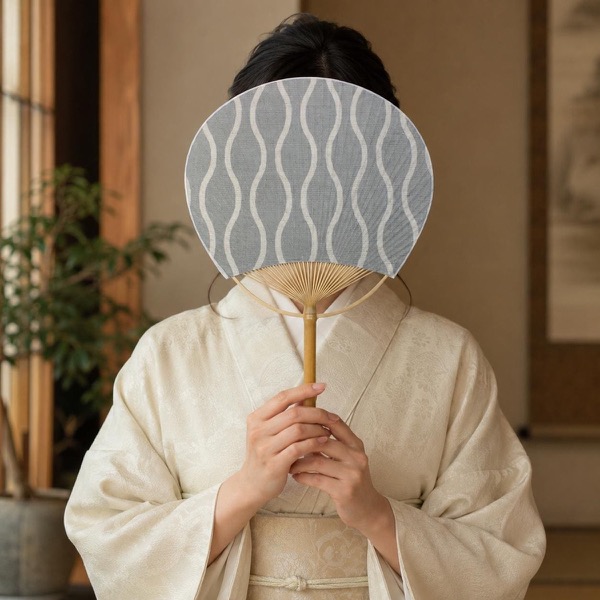
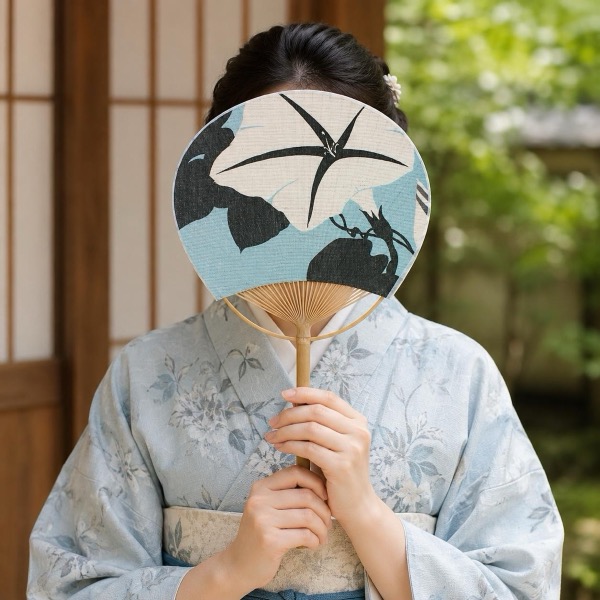
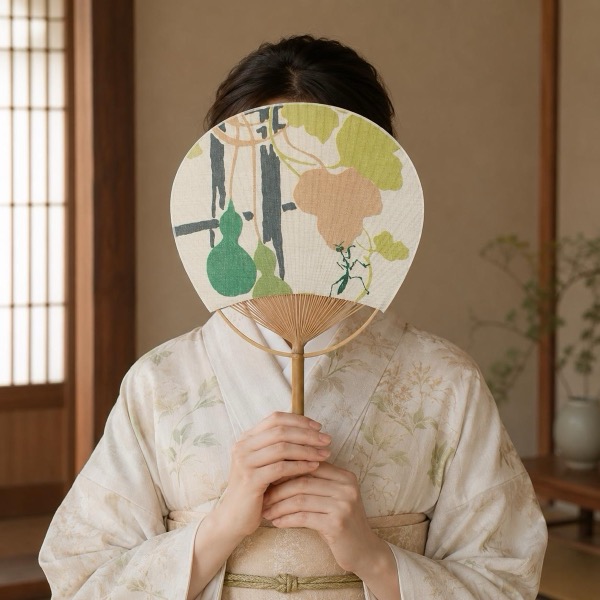
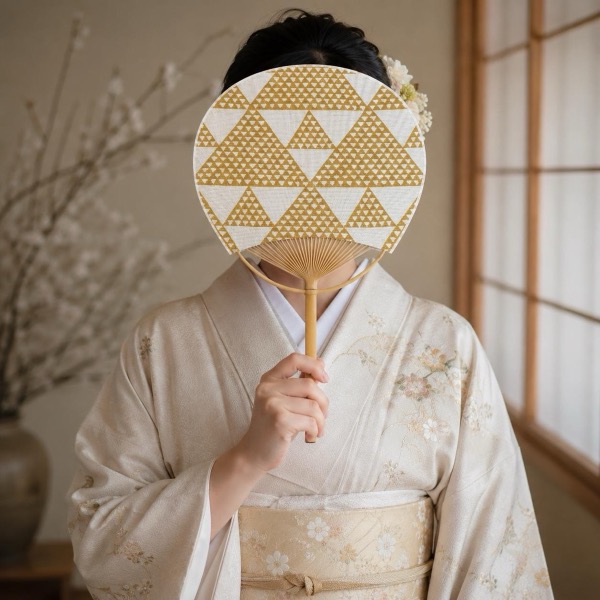
Choose a summer motif by matching mood before color. Waves and tatewaku-style lines feel crisp and architectural. Morning glory feels botanical and light. Dragonfly motifs are quiet and seasonal without being too floral. Koi can feel more graphic and giftable, especially when the room already has simple furniture. Gourd, uroko scale, and chidori bird motifs give a more traditional pattern language. If the room is already colorful, choose a calmer fan. If the room is neutral, one clear motif can become the seasonal accent without needing extra decoration around it.
Is an uchiwa fan a good Japanese gift?
An uchiwa fan is a good Japanese gift when the recipient likes useful objects, textile craft, small wall decor, or seasonal home accents. It is easier to understand than many collectible objects because the shape explains itself: it can cool, decorate, or sit on a shelf. A full-size linen tatewaku wave uchiwa fan suits a wall or desk, while a smaller piece can work as a compact gift. For compact browsing, compare nearby pieces in the Japanese gifts under $150 guide. Every NeoiAtelier piece is made in Japan and ships from Osaka.
Should you choose full-size or mini uchiwa?
Choose full-size uchiwa when the fan needs to hold visual space on a wall, in an entryway, or beside a larger object such as a noren, tapestry, or framed print. Choose mini uchiwa when the gift should feel easy to place, easy to store, and comfortable on a small desk or shelf. The full-size fan reads more like seasonal textile art. The mini fan reads more like a crafted keepsake. If the recipient rents, moves often, or prefers minimal decor, the smaller option is usually safer because it needs less wall space.
How should you care for an uchiwa used as decor?
Care for an uchiwa used as decor by keeping it dry, shaded, and lightly dusted. Hold it by the handle, not the linen face. If it is mounted, check that the hook or stand supports the handle and back structure rather than pressing into the front surface. Rotate the fan away from strong sunlight during the brightest months, especially if the motif has pale linen or deep indigo areas. When summer ends, store it flat or in a shallow box where books and heavy objects cannot bend the frame.
Where should you start?
Start with the room first, then the motif. If the wall needs a clear summer accent, choose an open uchiwa with a strong outline, such as a wave, floral, or koi design. If the gift needs to be compact, compare mini fans before choosing a larger display piece. The mini koi linen uchiwa fan is a useful reference point for scale, while the Japanese handcrafts collection helps compare fans with other small decor.