What Is a Koro? 15 Things to Know About Japanese Incense Burners
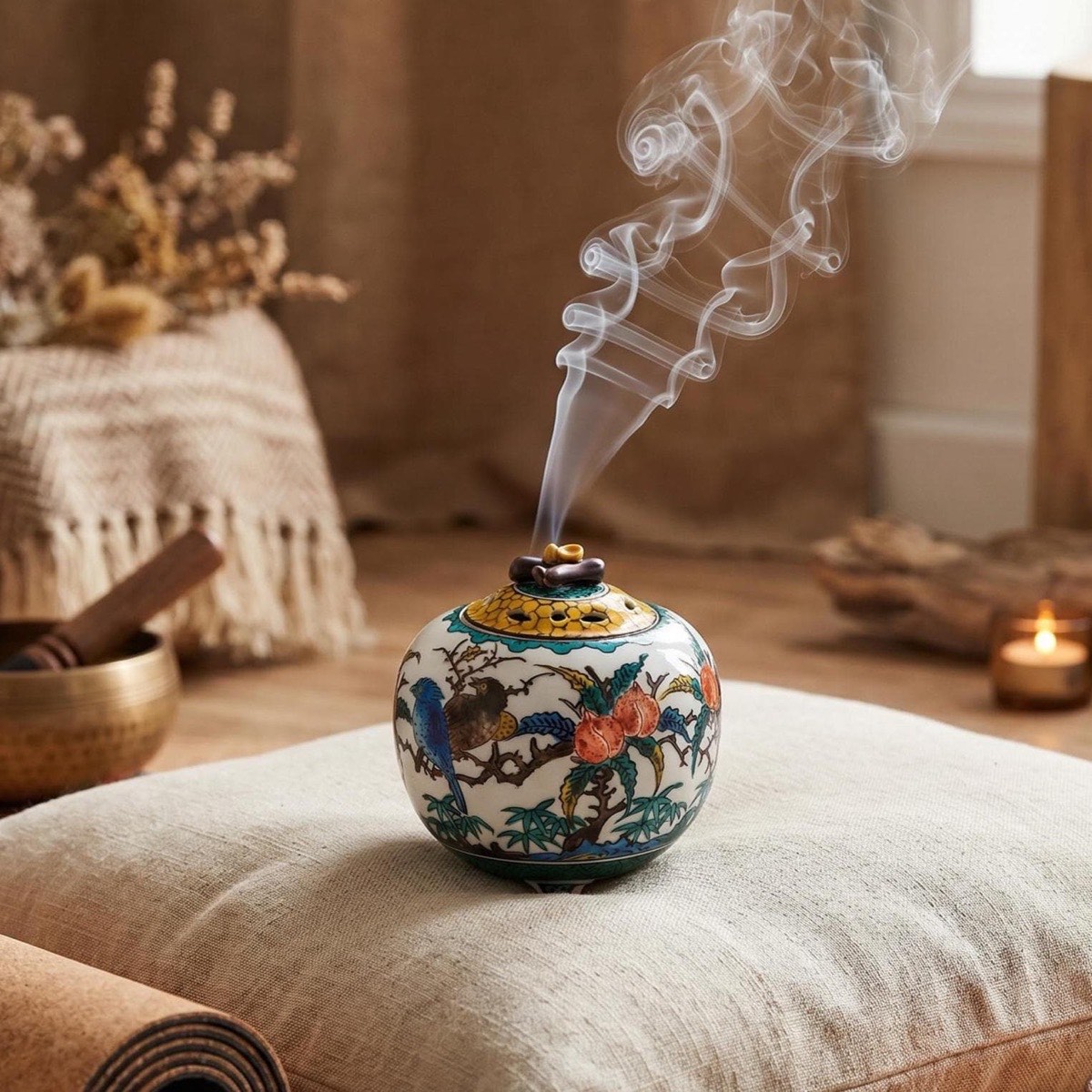
The koro is one of the most quietly collectible objects in Japanese craft — a lidded porcelain incense burner that is equal parts instrument and sculpture. Here are the fifteen questions buyers and collectors ask most, answered plainly.
1. What exactly is a koro?
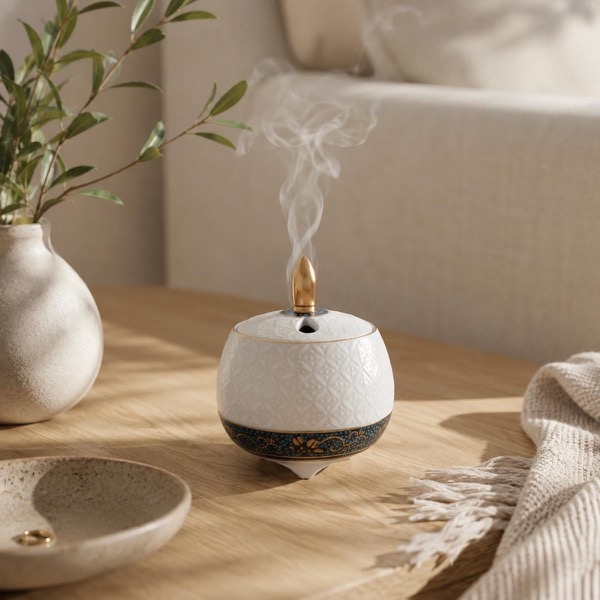
A koro is a lidded Japanese incense burner. Incense burns inside the body, and the pierced or domed lid diffuses the smoke softly. Koro have been used in temples, tea ceremony and homes since incense culture (kodo) took root in Japan over a thousand years ago.
2. How is a koro different from an ordinary incense holder?
A simple holder grips a stick and lets it burn in open air. A koro encloses the burning incense, softens the smoke, contains the ash — and remains a finished decorative object even when nothing is burning.
3. What is a Kutani koro?
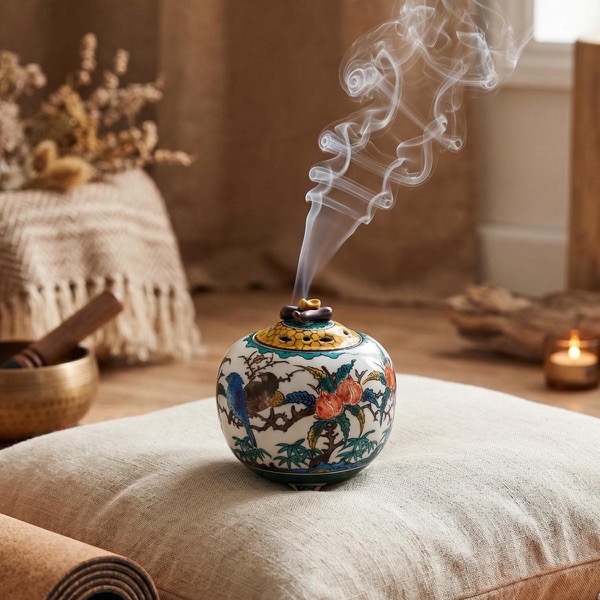
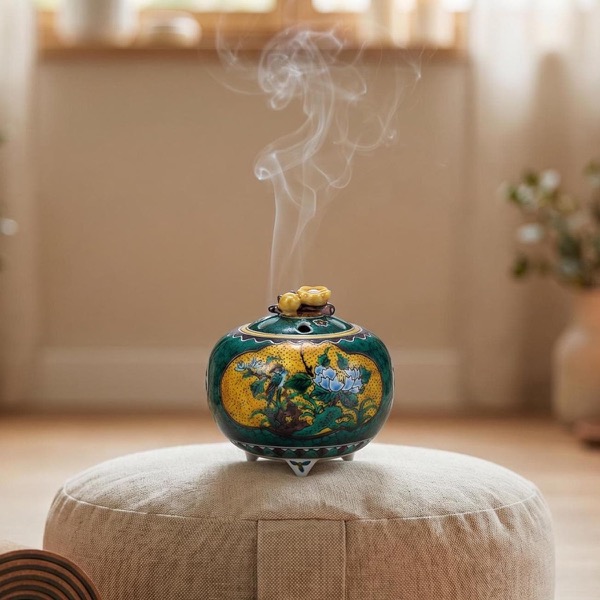
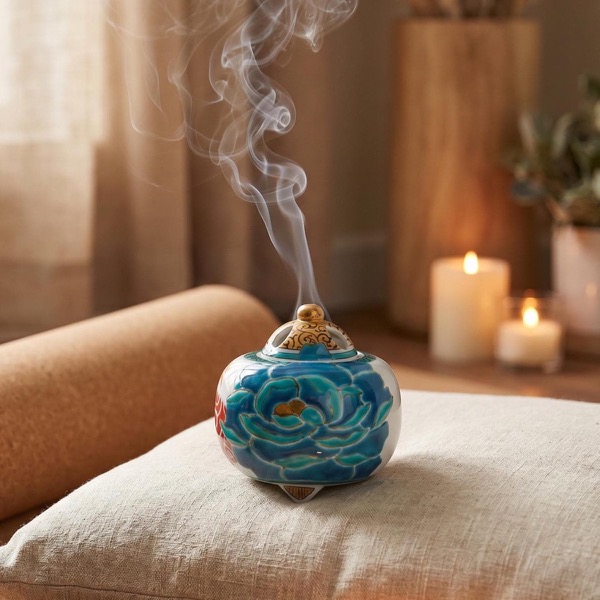
Kutani ware is overglaze-painted porcelain from Ishikawa Prefecture, fired since 1655. A Kutani koro carries that painting tradition — peonies, flower-and-bird scenes, landscapes — in the five classic colors known as gosai: green, blue, yellow, purple and red.
4. How do I burn incense in a koro?
Fill the body a third full with white incense ash, rest a cone or coil on the ash bed, light it, and set the lid in place. Without ash, use a small heat-safe dish inside. Always burn on a stable, heat-resistant surface.
5. Can I burn incense sticks in one?
Yes — push the stick upright into the ash bed and let it burn with the lid off, or lay short sticks across a dish inside larger koro. Cones and pressed incense suit the closed-lid style best.
6. Do I have to burn anything at all?
No. Many owners treat a koro purely as porcelain art: in a tokonoma alcove, on a console, beside books. A hand-painted lid is a still life on its own.
7. What do Kutani koro cost?
Studio-painted Kutani koro typically run $100–$550 depending on size, painting density and gold work. Museum-grade antique pieces go far higher at auction. Our collection of hand-painted Kutani koro spans $100–$550, each gift-boxed from Osaka.
8. How do I choose a first koro?
Choose the painting style first: bold Ko-Kutani greens for a statement, white-and-silver or blue landscape pieces for minimal rooms. Then size — small koro (2–3 in) for desks and tea corners, larger pieces to anchor a shelf.
9. Are NeoiAtelier koro made in Japan?
Yes. Every koro we curate is hand-painted by artisan studios in Ishikawa Prefecture and shipped from Osaka with gift-ready packaging — never mass-produced overseas.
10. What is the lid's pattern for?
The pierced openings control airflow and shape how smoke rises. Classic motifs — shippo linked circles, clouds, chrysanthemums — are chosen so the smoke appears to rise through the design.
11. How do I clean a koro?
Empty cooled ash occasionally, then wipe with a dry or barely damp soft cloth. No dishwashers, no abrasives: overglaze enamel and gold sit on top of the glaze like a painting.
12. Is incense smoke safe indoors?
Burn in a ventilated room, away from smoke detectors, children and pets, and never leave burning incense unattended. Japanese incense is typically low-smoke compared to Indian styles.
13. What incense should I use?
Japanese-made cones or short sticks pair naturally — sandalwood, hinoki and plum blossom are classic. Quality Japanese incense burns clean and lingers subtly rather than overwhelming a room.
14. Do koro make good gifts?
They are one of the strongest 'wow' gifts in Japanese craft: artistic, useful, compact to ship, and arriving in wooden or gift boxes. Popular for housewarmings, weddings and retirements.
15. Where can I see real examples?
Browse our Kutani incense burner collection — every piece photographed from the actual studio batch, with sizes listed, and secure on-site checkout with free worldwide shipping.