Japanese Folding Fan vs Portable Fan for Travel
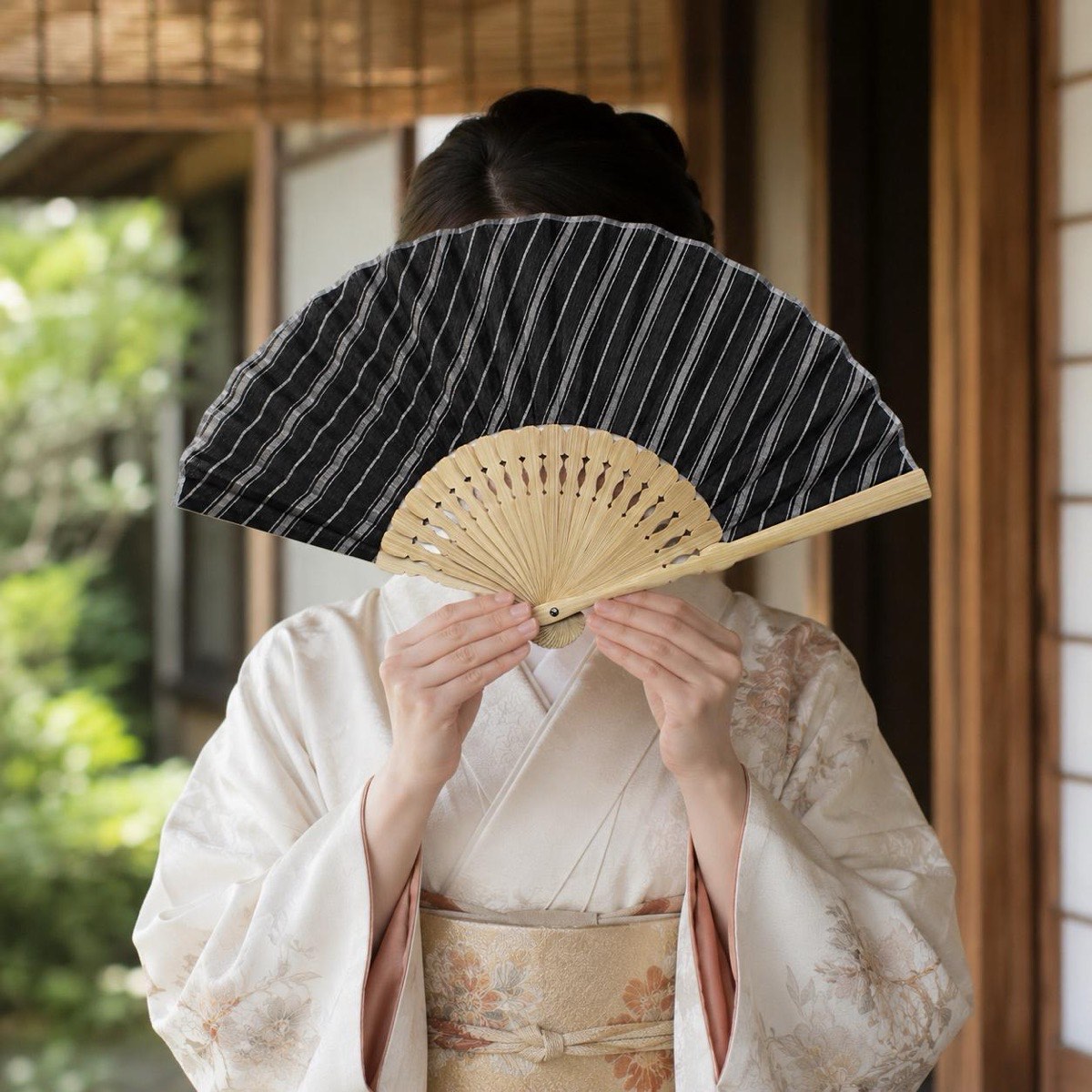
Choose a Japanese folding fan for travel when you want a quiet, compact breeze with no charging routine and the pleasure of a handmade object. Choose a portable fan when continuous airflow matters more than a small, tactile carry piece. The better option is the one that fits your itinerary, bag, and habits.
What Is the Difference Between a Japanese Folding Fan and a Portable Fan?
A Japanese folding fan, or sensu, creates airflow through your hand movement. It opens from a slim stack of ribs into a fan shape, then closes again when the moment has passed. A portable fan uses a motor and battery to move air without repeated hand motion. Neither is automatically better: the difference is about use. A sensu is an object you carry deliberately, open for a few minutes, and put away. A portable fan is an appliance for longer stretches when you want a steady breeze while your hands are busy. Comparing them by practical needs keeps the choice simple and avoids treating traditional craft as a substitute for every modern device.
When Is a Japanese Folding Fan the Better Travel Choice?
A folding fan is the better travel choice when packability, simplicity, and a small personal ritual matter most. It closes into a narrow shape, takes no cable, and can be used whenever you are seated, waiting, walking slowly, or taking a break outdoors. It also makes sense for a traveler who prefers one reusable object over another item that needs charging. A linen sensu has a softer visual presence than a plastic device and can stay useful after summer as a desk or shelf accent. See the black-stripe Ojiya Chijimi linen sensu for a compact folding form made for carrying with care.
When Does a Portable Fan Make More Sense?
A portable fan makes more sense when you expect long periods in still heat and want a continuous breeze without using one hand. For a day built around queues, outdoor transit, or active movement, a motorized fan may be the more practical primary tool. Check the maker's current instructions for charging, battery care, and any travel restrictions before you pack it. That does not make a folding fan redundant. A sensu can complement a portable fan as the lighter option for a restaurant, a museum courtyard, a train platform, or an evening walk, when a gentle and unobtrusive breeze is enough. Choose according to the conditions rather than expecting one object to cover every part of a trip.
How Does an Uchiwa Fit Into the Decision?
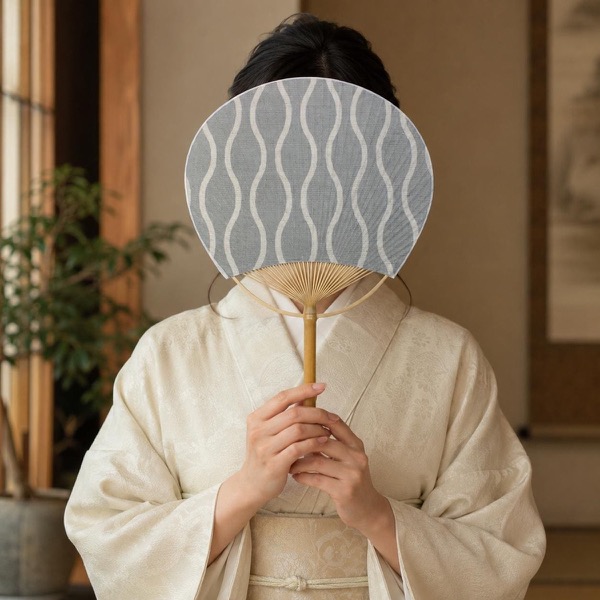
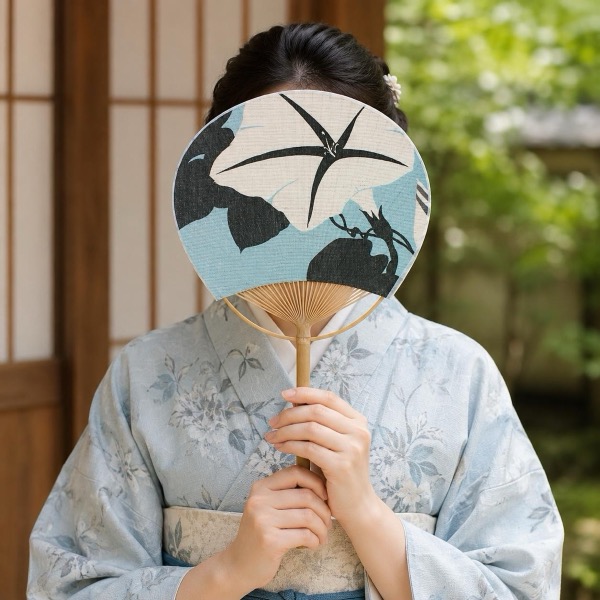
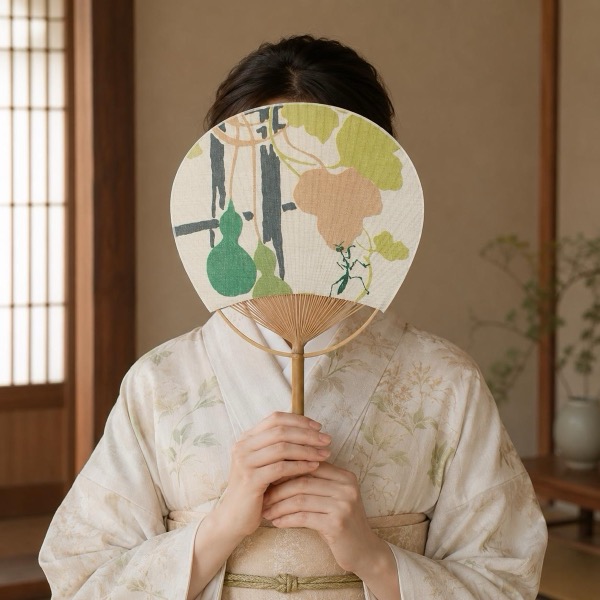
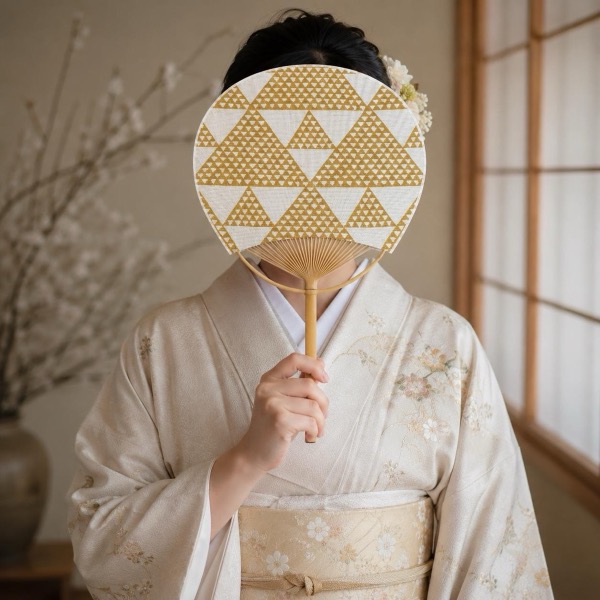
An uchiwa is the third useful shape to consider. Unlike a folding sensu, it stays open on a rigid frame, so it offers a broad face and is best when you value a stronger hand-made breeze or want a visible decorative object. It is less convenient inside a small bag, but it can earn its place in a picnic basket, beach tote, or summer room. A sensu suits compact daily carry; an uchiwa suits an open, settled setting. The Japanese fan collection lets you compare both forms, from folding linen sensu to full-size and mini uchiwa.
What Makes a Handmade Folding Fan Worth Carrying?
The value of a handmade folding fan is not only the breeze. Its bamboo frame, folds, and textile leaf make carrying it feel more intentional than reaching for another powered accessory. NeoiAtelier's fan selection pairs bamboo with linen, including Ojiya Chijimi, a textured linen associated with Niigata. The result is light enough to carry while still reading as a craft object when it is closed or displayed. A subtle stripe or restrained color can work with ordinary travel clothing without becoming costume-like. For the textile context, read our Ojiya Chijimi linen guide before choosing a fan by material as well as pattern.
How Should You Pack a Sensu for Travel?
Pack a sensu closed, dry, and protected from pressure. A sleeve, slim pouch, or the flat pocket of a day bag is safer than letting it sit among keys, bottles, and chargers. Keep it away from rain, direct sun through a car window, and the bottom of a heavily packed suitcase. Open it gently by the outer rib rather than forcing the leaf, then close it fully before putting it away. Those small habits help the bamboo ribs and linen surface stay neat through repeated use. Our Japanese fan care guide explains the simple dry handling and storage routine in more detail.
Can a Japanese Folding Fan Be a Thoughtful Travel Gift?
A Japanese folding fan can be a thoughtful travel gift for someone who appreciates useful, well-made objects but does not need another large souvenir. It needs no sizing, slips into a small bag, and can be used at home as well as on a trip. Choose a pattern that matches the recipient's everyday style instead of trying to guess at a symbolic meaning. The best gift fan is one they will feel comfortable carrying. Every NeoiAtelier piece is made in Japan and ships from Osaka, where the collection is selected for practical use and calm visual character.
Which Fan Should You Choose for Travel?
Choose a Japanese folding fan if you want the lightest, simplest companion for short bursts of cooling and a handmade keepsake after the trip. Choose a portable fan if your plan calls for uninterrupted airflow with minimal hand effort. Choose an uchiwa when a broad hand-made breeze and summer display matter more than compact packing. Start with the use case, then choose the shape and material that you will genuinely carry. Browse Japanese gifts under $150 for compact handmade options that travel well and still feel considered.