Koro vs Incense Holder vs Incense Bowl: Which to Use?
Use a koro when you want a lidded Japanese incense burner that contains ash and works as decor. Use a simple holder for one stick at a time. Use an incense bowl when you want the most flexible ash bed for short sticks, cones, or a quieter home ritual.
What Is the Difference Between a Koro, Holder, and Bowl?
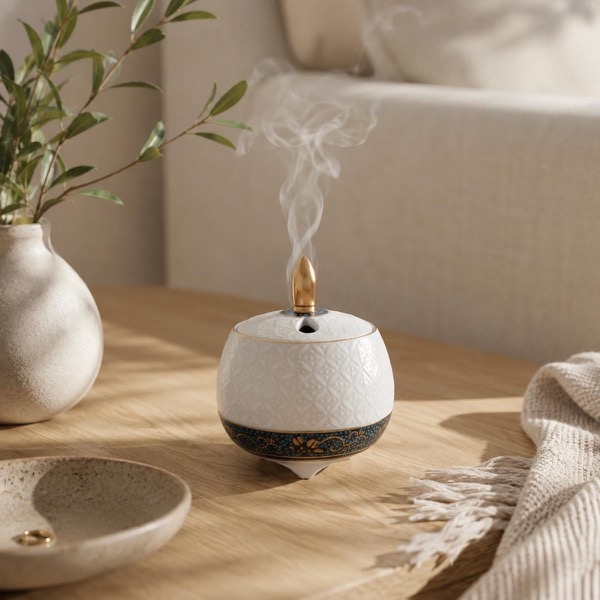
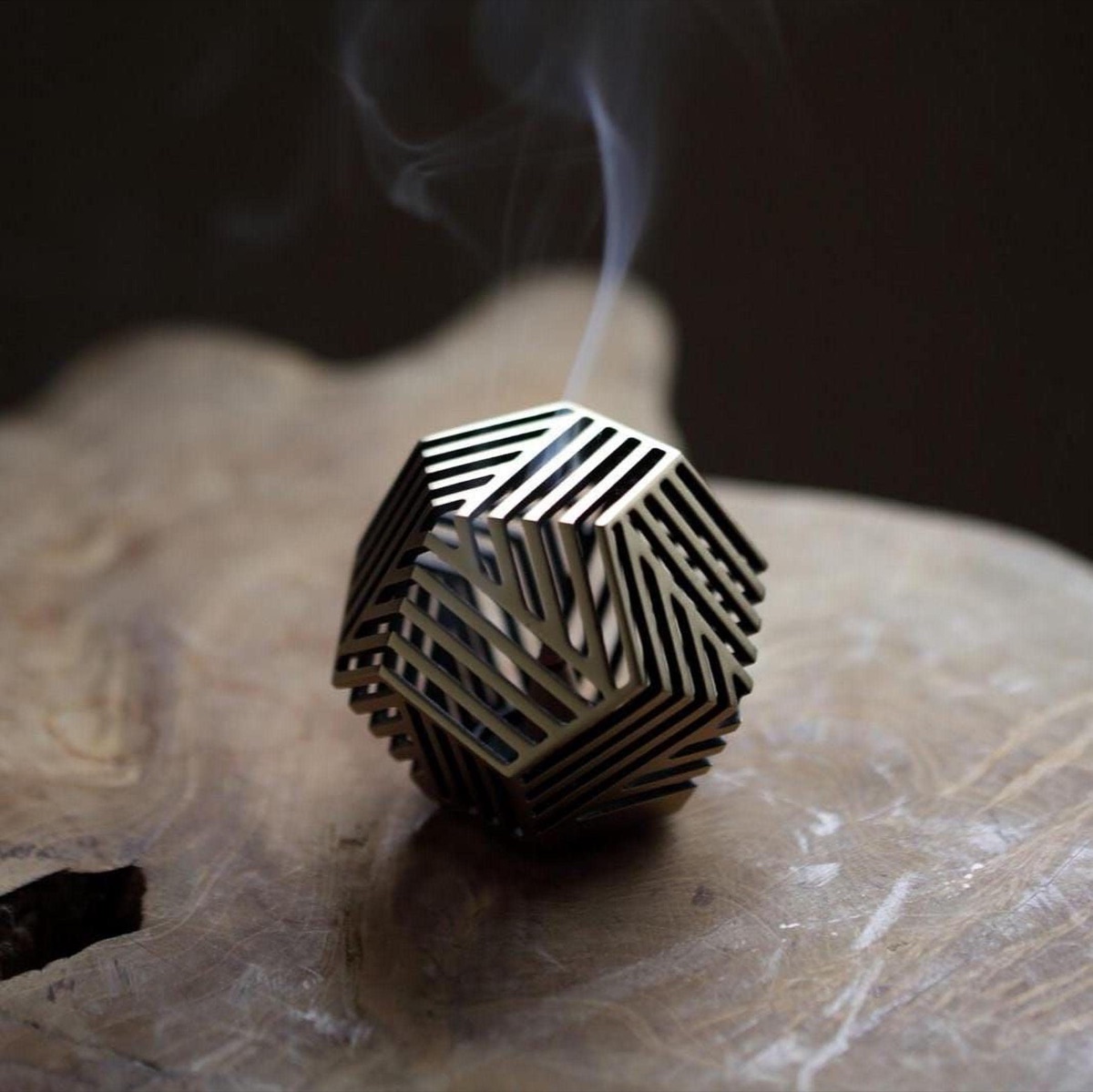
A koro is a small incense burner, usually ceramic or metal, with enough body to hold ash, a cone, or a small heat-safe dish. Many Japanese koro also have a pierced lid, so the vessel softens how smoke rises and looks complete even when no incense is burning. An incense holder is simpler: it grips one stick or cone and catches falling ash, but it usually leaves the incense exposed. An incense bowl is the most open format, filled with ash, sand, or another heat-safe bed. It is practical, but less finished as a display object unless the bowl itself has craft value.
When Should You Choose a Koro?
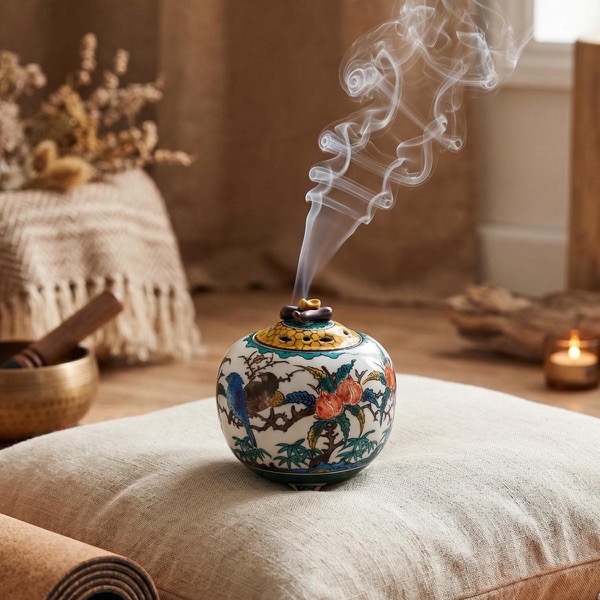
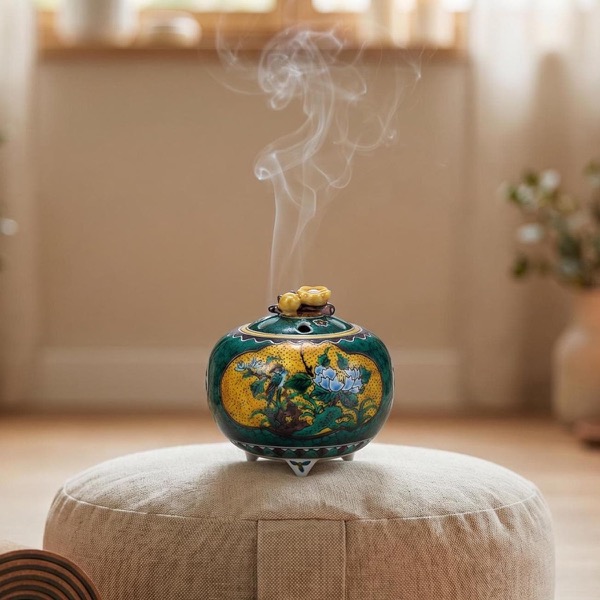
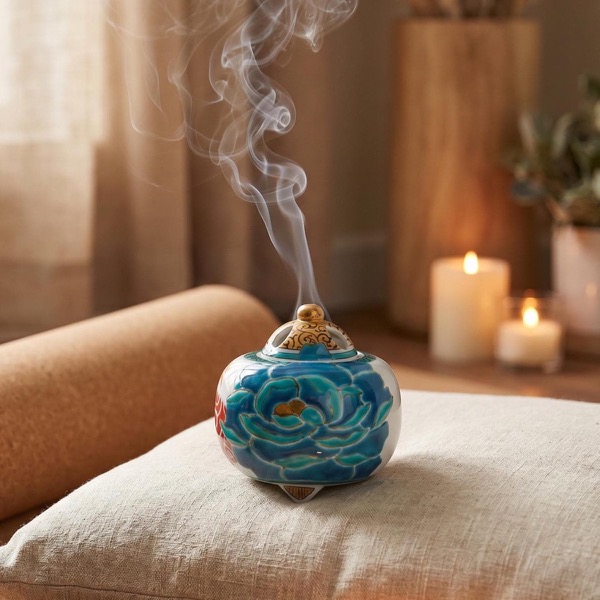
Choose a koro when the burner will stay visible on a shelf, entry table, desk, or tea corner. It is the best option when you want the object to matter as much as the scent. A Kutani porcelain koro adds painted detail, while a bronze or darker metal burner reads quieter and more architectural. Koro are also useful when you burn cones or short sticks because the body helps contain ash and keeps the burning point away from furniture. For long sticks, check the interior width before buying; some compact koro are better for cones, incense trails, or short Japanese sticks than for full-length sticks.
When Is a Simple Incense Holder Better?
A simple holder is better when you burn one stick occasionally and want the smallest setup. It takes little space, costs less, and is easy to empty after each session. The tradeoff is exposure: ash can fall outside a narrow tray if the stick is long or angled, and the object may look more like a tool than a keepsake. If you want a compact, modern option, the Japanese bronze incense burner gives the clean silhouette of a holder while keeping enough visual weight for a desk or meditation corner.
When Should You Use an Incense Bowl with Ash?
Use an incense bowl with ash when flexibility matters most. A level ash bed lets you stand short sticks upright, lay small pieces at an angle, or set a cone on a heat-safe point inside the bowl. It also makes cleanup predictable: let everything cool, lift out the stub, stir the ash, and level the surface again. The bowl method is useful for people who test different incense formats, but it needs a steady hand and a safe surface. Keep the ash bed below the rim, never let loose ash spill onto wood, and do not move the bowl until every ember is out.
Which Burner Is Safest for Sticks and Cones?
The safest burner is the one that fully supports the incense format you actually burn. For sticks, the holder should keep the stick stable and catch the full ash fall from tip to base. For cones, use a heat-resistant dish, koro floor, or bowl bed wide enough that the cone cannot roll. For ash burning, use a deeper vessel so the ash bed stays contained. Current home-fragrance guides still stress the same basics: use a heat-resistant surface, ventilate the room, and never leave burning incense unattended. Those rules matter more than the burner name.
Which Looks Best in a Japanese Home Decor Setting?
For display, the koro usually wins because it has the strongest shape. A Kutani koro can sit beside books, a tea cup, or a linen textile and still read as Japanese craft when it is not in use. A holder looks best in minimal rooms where a single clean line is enough. An incense bowl works when the bowl has texture, glaze, or color worth seeing. If you want the most traditional craft signal, browse the Japanese incense collection and compare porcelain koro, bronze burners, and incense sets side by side.
What Should You Buy as a Gift?
For a gift, choose the format that asks the least from the recipient. A koro is strongest for housewarmings, weddings, retirement gifts, or anyone who likes objects with a story, because it can be displayed even before the first burn. A holder is safer for someone new to incense because it is simple and direct. A bowl is best for someone who already burns incense and understands ash care. If you are unsure, choose a compact koro or holder and include incense sticks separately, so the recipient can try the ritual without needing extra tools.
How Do You Decide in One Minute?
Ask three questions. First, will the burner be displayed every day? If yes, choose a koro. Second, will you burn only straight sticks? If yes, choose a holder with a reliable ash catch. Third, do you want to experiment with ash, cones, and short sticks? If yes, choose a bowl or a deeper koro. Every NeoiAtelier piece is made in Japan and ships from Osaka. Start with our Kutani koro buying guide, then compare gift-ready pieces in Japanese gifts under $150.