Japanese Incense for Autumn: A Simple Home Routine
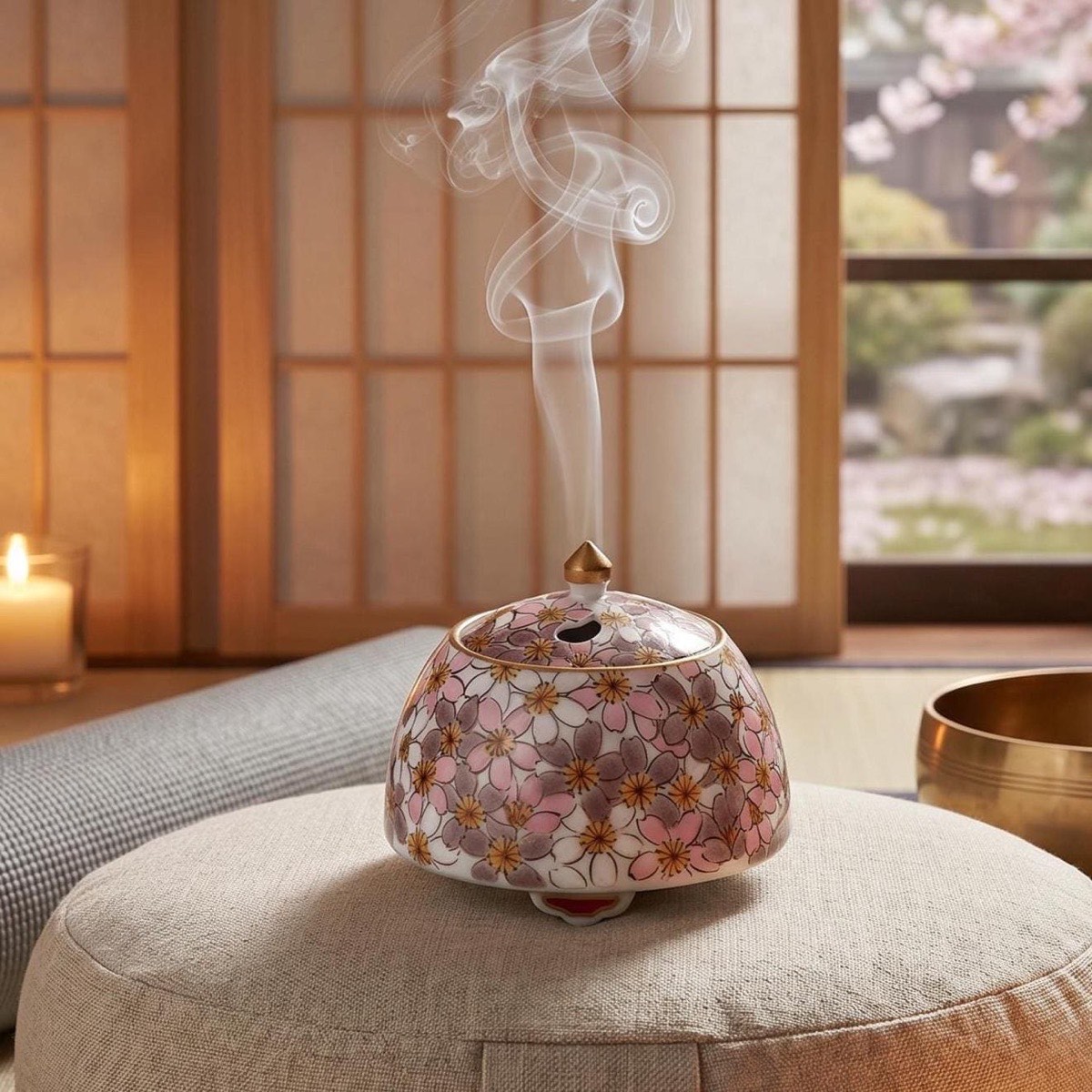
Japanese incense can suit an autumn home routine when you treat it as a brief, attended pause rather than a background scent. Choose a compatible burner, a stable heat-safe place, and one simple moment—after work, before reading, or while resetting a room—then keep the rest of the space calm.
What Makes Japanese Incense a Good Autumn Home Ritual?
Japanese incense can make an autumn routine feel considered because it gives a room a clear beginning and end without asking you to redecorate the entire space. The useful starting point is not a seasonal theme or a long list of fragrance notes. It is a small moment you already have: putting away a workday, opening a book, or sitting down before dinner. Light one incense product only when you can remain present, and let the object, scent, and pause do one job. This approach keeps the ritual practical for a compact home as well as a larger one. It also makes it easier to notice what you genuinely enjoy instead of turning a quiet room into a crowded display.
How Should You Choose an Incense Setup for Autumn?
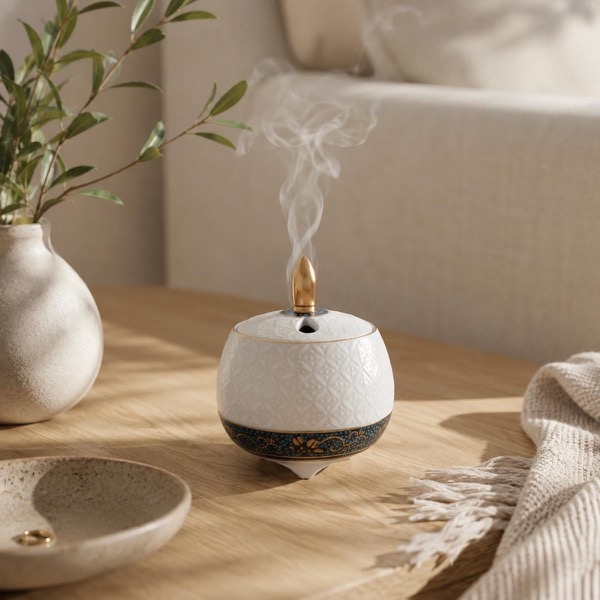
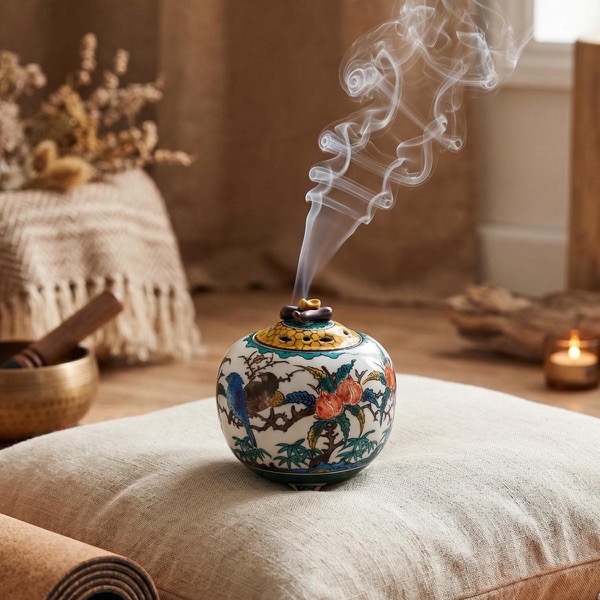
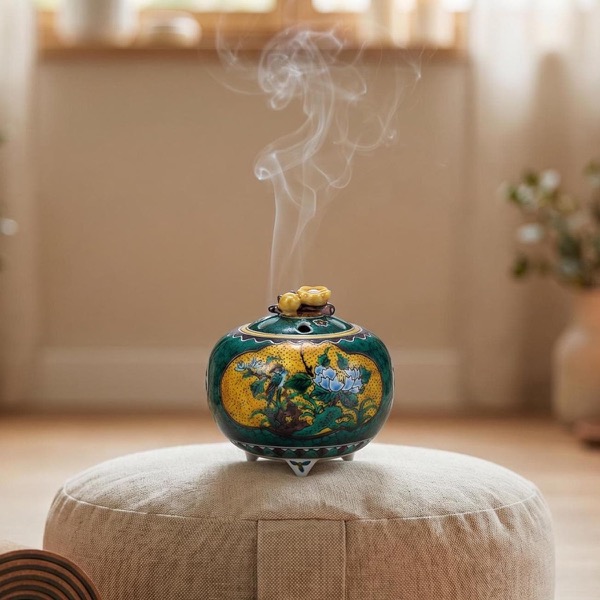
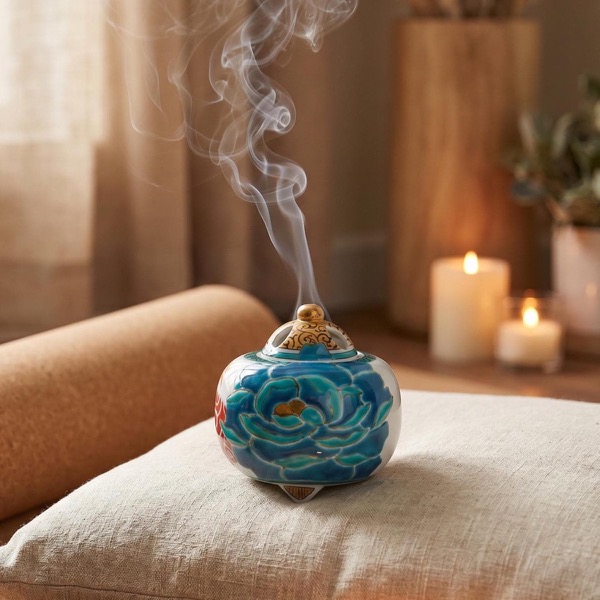
Choose the setup by compatibility before appearance. A koro, holder, or bowl must suit the specific incense format you plan to use; sticks, cones, coils, and loose materials do not share one universal arrangement. Read the incense maker’s directions, use the support intended for that format, and avoid improvising a fit because a vessel looks attractive. A Kutani koro can bring painted porcelain to a shelf or tea corner when it is not in use, but its practical setup still matters first. Start with the Japanese incense collection, then read our guide to choosing incense for a koro before selecting a burner and incense together.
Where Should You Place Incense in an Autumn Room?
Place incense where you can supervise it easily and where the surface is stable, heat-safe, and clear of items that could be affected by heat or a draft. A console near an entry, a low table beside a reading chair, or a clear shelf can work only when it gives the lit item enough open space and keeps it away from curtains, paper, dried flowers, bedding, and passing hands. Do not let a seasonal arrangement determine the location. The safest place is more important than the most decorative one. Our incense-burner placement guide helps you assess a table, shelf, or tea corner before making it part of a routine.
Can a Kutani Koro Add Seasonal Character When It Is Not Lit?
Yes. A Kutani koro can work as a small porcelain object between incense sessions, so an autumn room does not need separate decor for every occasion. Give it a clear resting place with enough space around it for its painted surface and form to register. A shelf with one ceramic object, a simple tray, or a quiet corner of a sideboard will usually feel more deliberate than a cluster of small accessories. Avoid treating the koro as a candleholder, storage vessel, or a substitute for another incense format without confirming that use is appropriate. For the practical role of the vessel, see koro versus incense holder versus incense bowl, and use our Kutani ware styles guide to compare visual approaches.
How Can You Keep the Routine Simple in a Small Space?
In a small room, use one scent activity at a time and leave surrounding surfaces open. You do not need incense, a scented candle, a diffuser, and several decorative objects to make an evening feel seasonal. Choose the one format that fits the moment, then let the room return to its ordinary use when the session ends. A single textile or a ceramic object can support the visual mood without competing with the fragrance. This is especially helpful in a home where the dining table, work surface, and relaxation area overlap. If you are deciding between fragrance formats, our Japanese incense versus candles guide compares the role of a brief scent pause with a longer period of candlelight.
What Should Guide Your Fragrance Choice?
Let your own preference and the maker’s directions guide the choice, rather than assuming a particular seasonal scent is required. You may prefer a subtle wood-forward fragrance, a floral profile, or no fragrance at all on a given day. Begin with one product you can use as directed, then notice whether it fits the actual room and time you have. Avoid layering strong scents or using more material to make the moment feel more autumnal. The goal is not to produce a fixed atmosphere. It is to make a short, manageable pause that still feels comfortable in the home you already have. Keeping the choice personal and restrained is more useful than trying to recreate a trend from a photograph.
What Safety Checks Matter Before Lighting Incense?
Before lighting incense, clear the surrounding area, confirm that the holder or koro is stable, and stay in the room for the entire session. Keep the lit product away from flammable materials, drafts, children, and pets, and follow the maker’s instructions for the incense and burner instead of relying on a general rule. Extinguish it before you leave the room or go to sleep, and allow the vessel to cool before moving or cleaning it. These habits matter in every season. For a step-by-step setup, read how to use a Japanese incense burner and keep the routine no more complicated than you can safely supervise.
Where Should You Start?
Start with one clear moment in your autumn routine and one compatible incense setup. Place it safely, keep the rest of the room uncluttered, and decide whether the scent and object genuinely fit the way you live. A Kutani koro can bring a small piece of painted porcelain to that pause as well as to the room between uses. Every NeoiAtelier piece is made in Japan and ships from Osaka. Explore the Japanese incense collection to find a Kutani koro whose scale and painted character suit the place where you will actually use it.