Japanese Meditation Corner Ideas for a Calm Home
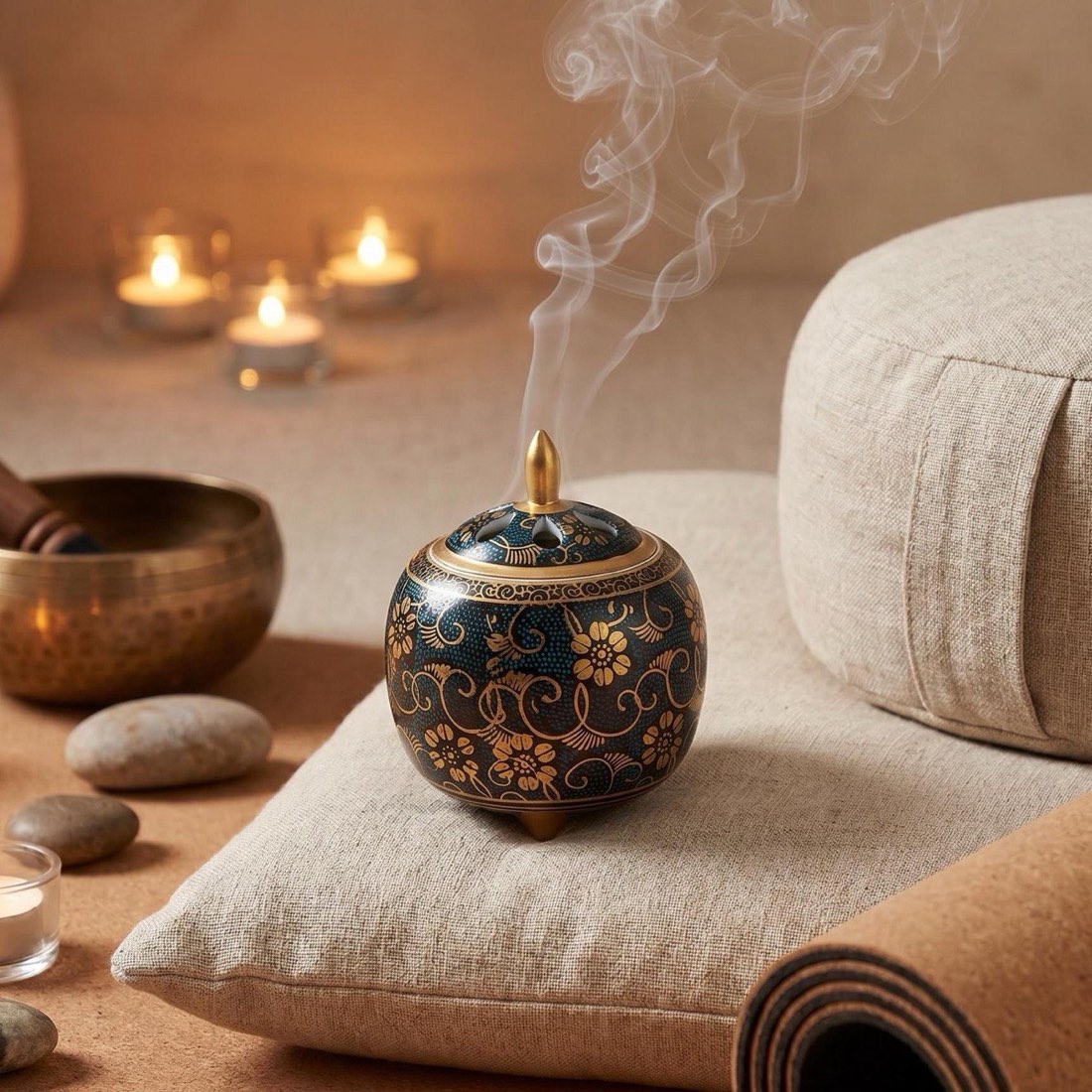
Japanese meditation corner ideas work best when the space is simple enough to return to every day: choose one quiet spot, keep the route clear, and add only objects that support your own practice. A handmade tea cup, textile, fan, or incense burner can give the corner character without turning it into a themed display.
What Makes a Meditation Corner Feel Calm?
A calm meditation corner is not defined by a particular style or by owning many special objects. It is a small place with a clear purpose, a little visual breathing room, and enough consistency that you can sit down without first moving a pile of everyday things. Begin with the practical conditions: a stable floor or chair, a source of comfortable light, and a route that other people can still use. Then remove what competes for attention. One cloth, one cup, or one small piece of art can make a corner feel intentional; several unrelated accessories can make it feel like another surface to manage. The aim is a personal place for quiet attention, not a replica of a temple or a showroom.
Where Is the Best Place for a Small Meditation Corner?
The best place is usually a spot you can reach easily and leave mostly undisturbed. A section of a living-room wall, the end of a bedroom, a clear area beside a window, or a quiet part of a home office can all work if the daily route remains open. Look at the corner from the room entrance before adding anything. If it already has a calm backdrop and does not interrupt storage, cleaning, or circulation, it is a stronger candidate than a dramatic but impractical location. You do not need a separate room. A small, repeatable setup often serves better than a larger space that has to be rebuilt each time. For ideas on keeping the surrounding room useful, see our Japanese living room decor guide before choosing a permanent spot.
Which Japanese Crafts Suit a Quiet Corner?
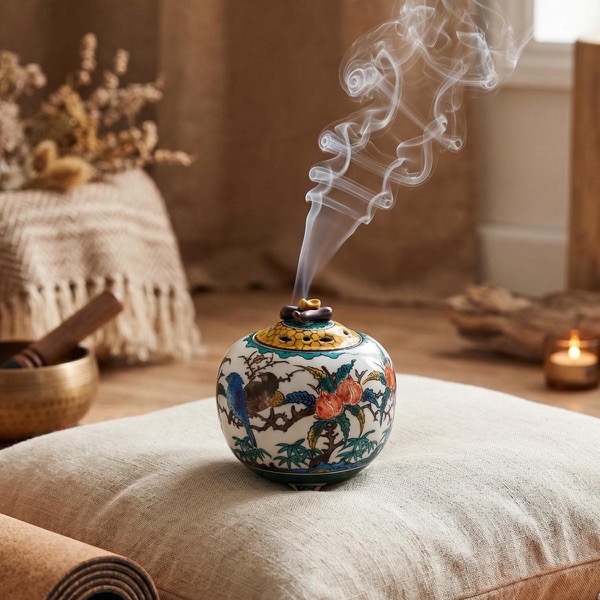
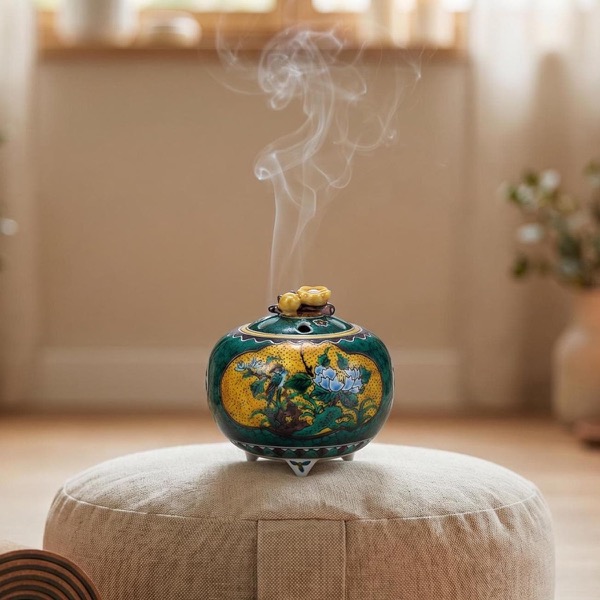
Choose Japanese crafts by the role they can play in the corner rather than by trying to collect a complete set. A Kutani yunomi can mark a tea pause before or after sitting. A linen noren or wall hanging can soften a nearby threshold or blank wall. An uchiwa or sensu can bring a small pattern and a useful object to a hook, shelf, or drawer. A Kutani koro may suit someone who already uses incense and has a safe place for it. Keeping the choices separate in this way makes the corner more adaptable: a cup can return to the kitchen, a fan can move with the season, and a textile can define a boundary without adding furniture. Browse the Japanese handcrafts collection for compact pieces that can be selected one at a time.
Can an Incense Burner Belong in a Meditation Space?
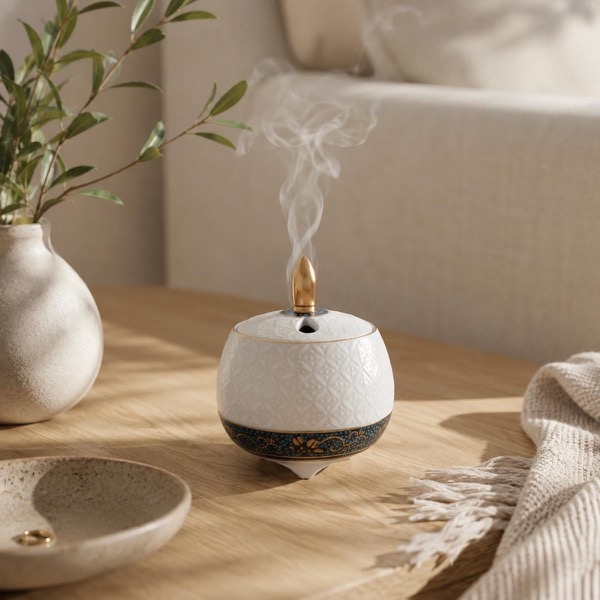
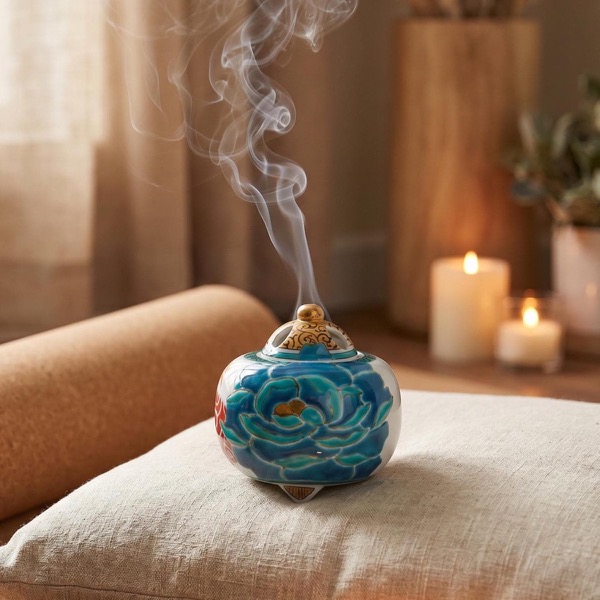
An incense burner can belong in a meditation space when incense is already part of your routine and you can give the burner its own stable, heat-resistant surface. Keep it well away from textiles, books, paper, pets, and passing sleeves, follow the incense maker's instructions, and never leave it unattended. The object does not need to be lit to contribute to the corner; a painted porcelain koro can also be appreciated as a small work of craft on a clear shelf or table. That distinction is useful for shared homes, compact apartments, and anyone who prefers a scent-free practice. Explore the Kutani incense burners collection, then read our Japanese koro use guide before choosing one for active use.
How Can Linen Define the Space Without Closing It Off?
A linen textile can give a meditation corner a visual edge without demanding a new wall or piece of furniture. Use a noren at a doorway just outside the practice area, or choose a wall hanging for the part of the room that remains visible while you sit. The textile should frame the space rather than block the path through it. Check the opening, hanging method, and light before selecting a panel, especially in a small apartment where every threshold needs to stay useful. A woven surface often provides enough texture on its own, so there is no need to add several patterns beside it. The noren and wall hangings collection offers textile-led options, and the no-drill noren hanging guide can help you assess a reversible setup.
How Should You Use a Japanese Fan in the Corner?
A Japanese fan is a flexible choice when you want a crafted accent with very little visual weight. A rigid uchiwa can rest on a hook or shallow shelf as a simple shape, while a folding sensu can be stored away between uses and brought out when the weather is warm. Treat the fan as one visual note, not a reason to introduce more motifs around it. Its scale makes it useful for renters and small spaces, where a large object can make a calm corner feel crowded. If you display one, keep it in a dry indoor place and let the surrounding surface remain clear. Compare the two forms in our Japanese hand fan guide before selecting a piece for display or everyday use.
What Should Stay Outside a Meditation Corner?
Keep the corner free of objects that make the practice harder to begin or maintain. That often means loose cables, household paperwork, overflowing storage, fragile items at floor level, and any incense setup that cannot be used with full attention. Avoid assuming that handmade linen, bamboo, or painted porcelain will suit every condition; direct sun, moisture, crowded shelves, and active routes can all create unnecessary care problems. This is not an argument for an empty room. It is a way to let the few chosen pieces remain visible and easy to respect. When an object has a defined place, it is more likely to become part of a routine than another item waiting to be moved.
What Is a Simple Japanese Meditation Corner Plan?
Start with one clear sitting place, one source of comfortable light, and one crafted object that supports the way you already pause at home. Add a tea cup for a tea ritual, a textile for a nearby threshold, a fan for a compact accent, or a koro only when incense use is appropriate to the setting. Every NeoiAtelier piece is made in Japan and ships from Osaka. To make a considered first choice, explore the Japanese incense collection, the Japanese handcrafts collection, and our Japanese decor for small apartments guide. Choose one piece that works with your real room and routine, then leave enough open space for the practice itself.